
Now Reading: The ‘P’ in Project Management: More Than Just Project
-
01
The ‘P’ in Project Management: More Than Just Project
The ‘P’ in Project Management: More Than Just Project

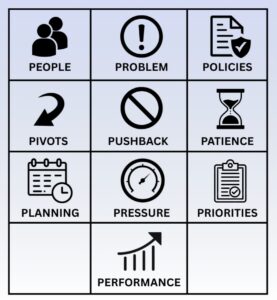
People: The Core of Projects
Success depends heavily on the people involved – the project team, stakeholders, sponsors and clients. Managing diverse personalities and skills requires strong communication, leadership and conflict resolution. Motivating and aligning the team around common goals is essential.
Problem: Continuous Problem-solving
Every project involves addressing challenges, be it technical issues, delays, or unexpected risks. Project managers must anticipate, analyze and solve problems quickly to prevent disruption and keep delivery on track.
Policies: Framework for Governance
Adherence to organizational policies, legal regulations, safety standards and ethical guidelines ensures the project is compliant and aligned with broader goals. Policies provide guardrails for responsible project execution.
Pressure: Handling Time and Stakeholder Demands
Time constraints, budget limits and external expectations create pressure. Project managers need stress management skills, clear prioritization and realistic communication to maintain performance and team morale.
Pivots: Flexibility and Adaptability
Projects frequently require changes due to shifting requirements or external conditions. The ability to pivot – revising plans and adjusting resources -is vital for maintaining relevance and success.
Patience: Navigating Challenges Calmly
Patience helps project managers endure delays, conflicts, or setbacks without rushed decisions. It supports steady progress and positive team dynamics.
Pushback: Managing Resistance Constructively
Stakeholders may resist decisions or changes. Encouraging open dialogue and negotiating effectively transforms pushbacks into valuable feedback, building trust and improving outcomes.
Planning: Foundation of Project Success
Comprehensive planning sets clear objectives, timelines, budgets and risk strategies. A robust plan guides execution, resource allocation and progress tracking, minimizing surprises.
Priorities: Focusing Efforts Wisely
Identifying high-impact tasks and critical path activities ensures efficient resource use and timely delivery. Prioritizing helps avoid scope creep and misaligned team efforts.
Performance: Measuring and Driving Results
Tracking project progress and quality through performance indicators enables accountability and early corrective actions. Celebrating milestones boosts team motivation.
The “P” in project management symbolizes more than just the project itself. It encompasses the people who execute it, the problems to solve, the policies to follow, the pressures to manage, the agility to pivot, the patience to stay focused, the pushback to negotiate, the diligent planning, prioritized actions and continuous performance monitoring. Mastering these facets helps project managers deliver successful, value-driven projects.
Related Posts

Stay Informed With the Latest & Most Important News
Previous Post
Next Post








Advertisement