Bath Towels and Stakeholders: The Unexpected Faces of Project Management
This story is also related to the project that I mentioned in my previous column. I have had many experiences working in difficult project environments with a large and complex set of stakeholders. Project life is not always easy. We do not always get well-trained, well-mannered, educated, or amicable stakeholders to deal with.
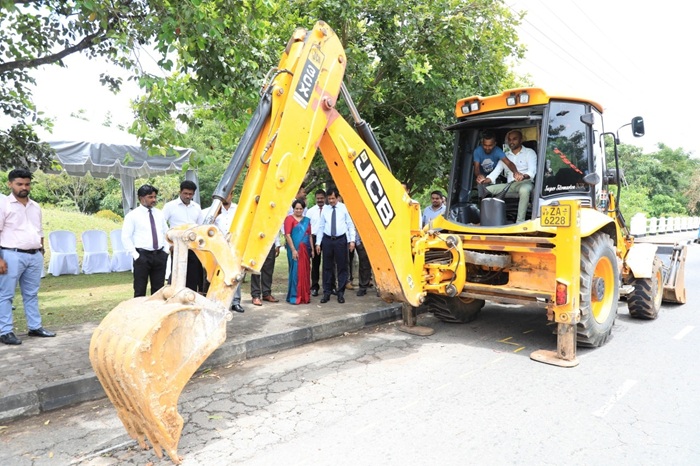
In this flood control project, we were developing a coastal environment. The education level and living standards of the dwellers were very poor, and their infrastructure was poorly maintained. One of the key issues we encountered was the frequent damage to household water supply lines. We had to improve the internal road and drainage network in an area of nearly 10 square kilometres, densely populated with unplanned settlements and poor sanitary facilities. This required us to excavate roads and drains, transport heavy equipment, and set up temporary site offices and logistics facilities.
We also had a collection of drawings of existing utility lines provided by the authorities. However, during construction we encountered pipelines that were not shown in those drawings. When we reported them, the relevant utility authority was surprised, as they had no records of such lines.
As a result, we encountered several conflicts with project neighbours, whose water supply and drainage systems were often disrupted or damaged by our work. Most of these neighbours were illegal settlers encroaching on railway reservation land. Some project officers believed these people were not important stakeholders. However, the more mature project management team members disagreed, emphasizing that all individuals affected by the project are stakeholders, regardless of their legal status.
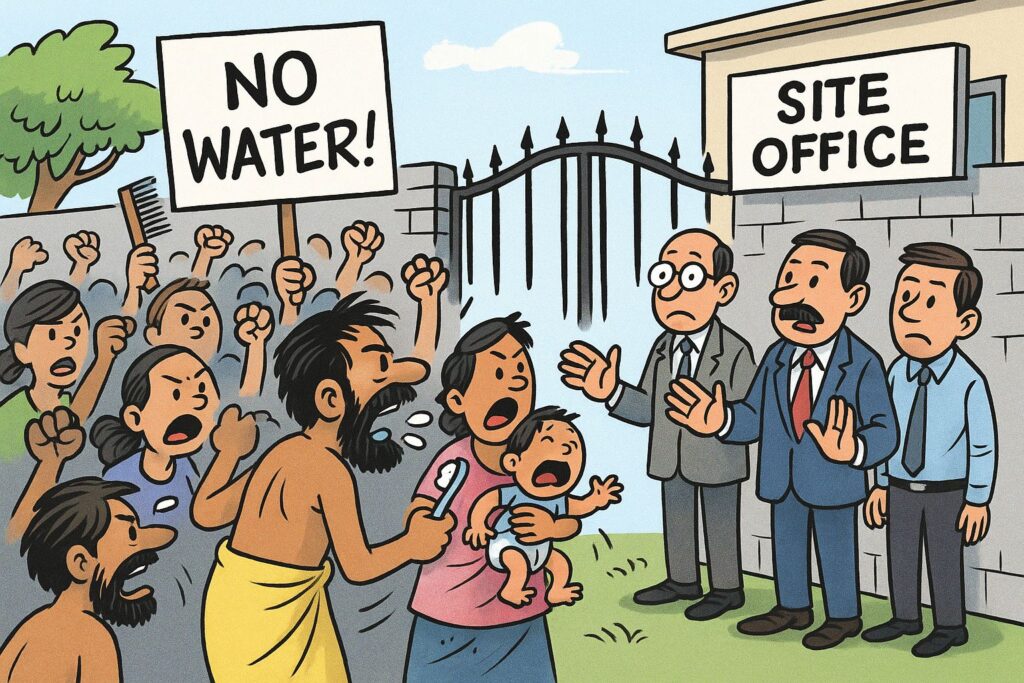
One morning, during our daily meeting with the “sticky note project manager” (please refer to my earlier article in this series), we suddenly heard the noise of a public protest. When we stepped outside, we were shocked to see a large gathering of villagers outside the office gate. Many were still in bath towels, some men were brushing their teeth, and women carried half-washed children and laundry baskets. Their demand was simple: to use the site office washrooms, as their household water supply had been cut due to damage from our excavation earlier that morning.
Initially, they were aggressive and even tried to break the office gate. Our local officers quickly escorted expatriate staff to safety, while a few senior local staff, including myself, went forward to meet the protesters. We spoke to them politely and tried to calm them. They replied angrily that this was not the first time their water supply had been disrupted, and they had reached the limit of tolerance. Some young protesters even attempted to attack us, but the elders controlled them. Soon, we identified a few community leaders among them and carefully invited them inside for a discussion.
We apologized sincerely and explained that the water supply would be restored as soon as possible. In the meantime, we promised to send water bowsers immediately. We also admitted that, given the nature of the construction work, we could not guarantee such incidents would never happen again. Instead, we invited them to appoint community representatives to coordinate with us during construction and jointly resolve future problems. We also agreed to keep an additional water bowser on standby for emergencies.
From that point until the end of the project, nearly three years later, there were no further public protests. Instead, mutual understanding and collaboration improved significantly.