Project monitoring is the heartbeat of any construction project, vital for ensuring progress aligns with the planned schedule, budget and scope. It involves continuously tracking actual work completed to detect early any deviations that could cause delays, cost overruns or quality issues. Effective monitoring requires a mix of systematic data collection, analysis and the use of advanced tools and technologies.
Key monitoring techniques include regular physical site inspections, which provide a firsthand view of progress and help verify if work meets the planned criteria. Tracking project milestones such as foundation completion or structural roofing, helps managers gauge overall project status. A widely used advanced method, Earned Value Management (EVM), integrates cost, schedule and scope data into objective metrics like Schedule Variance and Cost Performance Index, supporting better forecasting and risk mitigation. Though simpler methods like estimating percentage completion are common, they tend to be subjective and less precise.
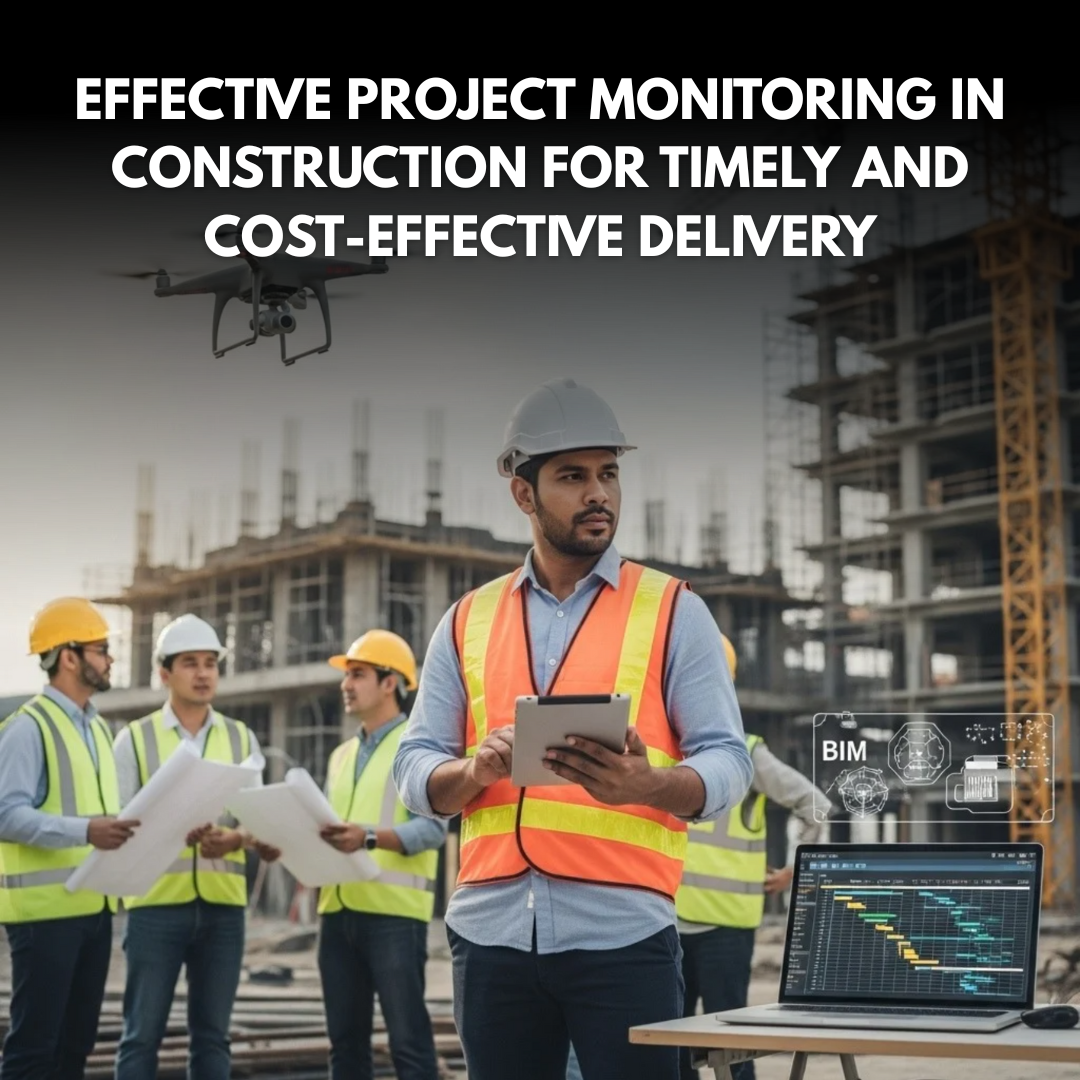
Modern technology plays a transformative role in project monitoring. Digital tools like Gantt charts and Building Information Modeling (BIM) provide planners and managers interactive, real-time visualizations of project progress, helping identify bottlenecks instantly. Drone technology enables aerial site surveys, offering up-to-date visual data that improve accuracy and reduce manual inspection time. Additionally, IoT sensors and GPS tracking equip project teams with continuous, automated status updates from the site.
For implementation, project managers should first set clear objectives and key performance indicators (KPIs) tied to timelines, budgets and quality standards. Selecting appropriate construction-specific software tailored to project needs enhances monitoring efficiency, resource allocation and data management. Real-time data collection paired with regular progress meetings ensures timely identification of issues and collaborative problem solving. Transparent documentation and reporting maintain stakeholder confidence and accountability.
The primary benefits of rigorous project monitoring are early problem detection, efficient resource use and data-backed decision-making, ultimately increasing the probability of delivering projects on time and within budget. However, it requires consistent effort, quality data and often investment in training and technology.
Mastering a combination of traditional methods with modern digital tools empowers construction professionals to maintain robust control over project progress. Through vigilant monitoring, they can navigate complexities, reduce risks and confidently drive projects toward successful, timely completion. This balanced approach is essential for consistently achieving high-quality outcomes while optimizing costs and schedules.