Digital transformation has become one of the most influential forces, driving change across industries and project delivery is no exception. As organizations shift from traditional methods to technology-driven practices, project teams are redefining how they plan, execute, collaborate and measure success. This transformation is not just about adopting new tools, it is about changing the way projects are managed, improving efficiency, enabling smarter decision-making and creating more resilient and adaptive project environments.
One of the most impactful changes brought by digital transformation is the rise of data-driven project management. Modern projects generate large volumes of data from site activities, resources, schedules, risks and financials. With tools like Power BI, Tableau and cloud-based project management platforms, teams can analyze real-time data to identify trends, forecast delays and detect potential risks early. This shift from reactive to predictive management allows project managers to intervene proactively and avoid costly disruptions. Data analytics has become the foundation for better planning accuracy and informed decision-making.
Digital transformation has also revolutionized collaboration and communication. Cloud platforms such as Microsoft Teams, Slack and project management tools like Asana, Trello and Jira have replaced traditional communication channels. These systems allow real-time messaging, shared dashboards, instant updates and centralized documentation. Team members from different locations can collaborate as if they were in the same room. This level of integration reduces misunderstandings, accelerates approvals and allows for seamless coordination between clients, consultants, contractors and suppliers.
Another significant advancement is the use of automation and artificial intelligence in project delivery. AI-powered tools can automate scheduling, track progress, flag anomalies and even recommend solutions.
Technologies such as robotic process automation (RPA) help eliminate repetitive administrative tasks like data entry, reporting and document updates. AI-based forecasting models can predict project outcomes by analyzing historical and real-time data. These innovations allow project managers to focus more on leadership, problem-solving and strategy rather than administrative workload.
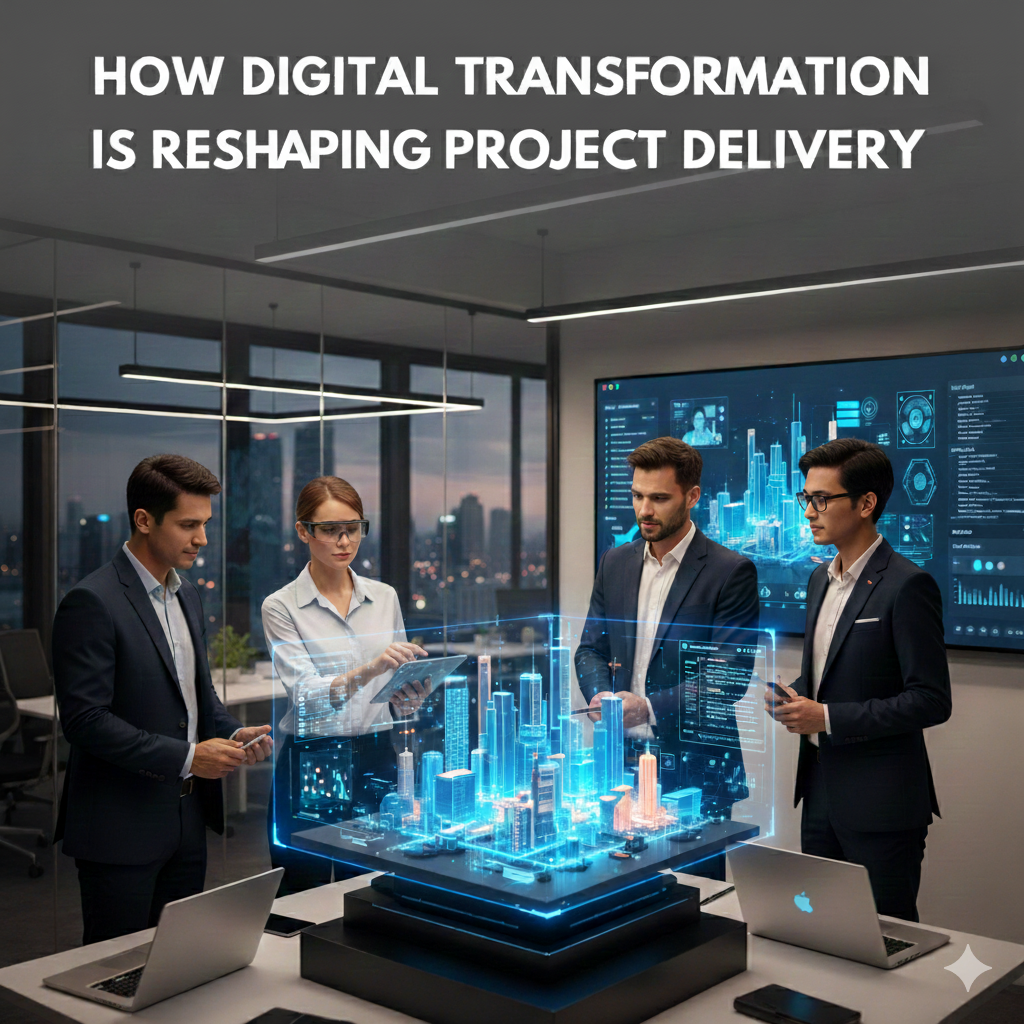
Digital transformation also enhances project visualization and planning through technologies such as Building Information Modeling (BIM), digital twins and 3D simulations. BIM enables teams to create accurate virtual models of structures, reducing design errors, improving coordination and preventing costly changes during construction. Digital twins mirror the physical asset in real time, allowing stakeholders to monitor performance and simulate scenarios before making decisions. These visual tools significantly improve clarity, reduce rework and enhance communication with clients and contractors.
The transformation has further strengthened remote project monitoring and field management. Mobile apps, drones, IoT sensors and cloud-based inspection tools allow real-time updates directly from the field. Drones can capture site progress, verify measurements and inspect hard-to-reach areas, reducing safety risks. IoT devices can monitor equipment usage, environmental conditions and material consumption. With this level of visibility, project teams can track productivity more accurately and quickly respond to site issues.
Digital technologies have also improved risk management. Automated risk registers, predictive analytics and integrated dashboards help identify and evaluate risks early. Instead of relying purely on experience or manual assessments, teams can use AI models to quantify risk impacts and prioritize mitigation strategies. This enhances resilience and ensures that projects remain stable even when faced with uncertainties.
Finally, digital transformation supports greater transparency and accountability. Cloud-based documentation, automated audit trails and real-time dashboards eliminate information gaps and ensure that all stakeholders have access to updated project information. This transparency leads to stronger governance, better contract compliance and improved trust among project participants.
Digital transformation is reshaping project delivery by making it faster, smarter and more collaborative. With the integration of data analytics, automation, AI, cloud platforms, BIM and IoT, modern projects are becoming more predictable, efficient and controlled. As organizations continue to embrace digital innovations, the future of project delivery will be more connected, intelligent and resilient, offering new opportunities for excellence in every industry.