It is with a variety of feelings that we are accepting/despising the addition of artificial intelligence into our list of project management tools. Depending on who you are, how you enable it, and the concerns you may have about using it, AI is a new and evolving creature that we cannot quite figure out without feeling both exhilaration and dread at the same time.
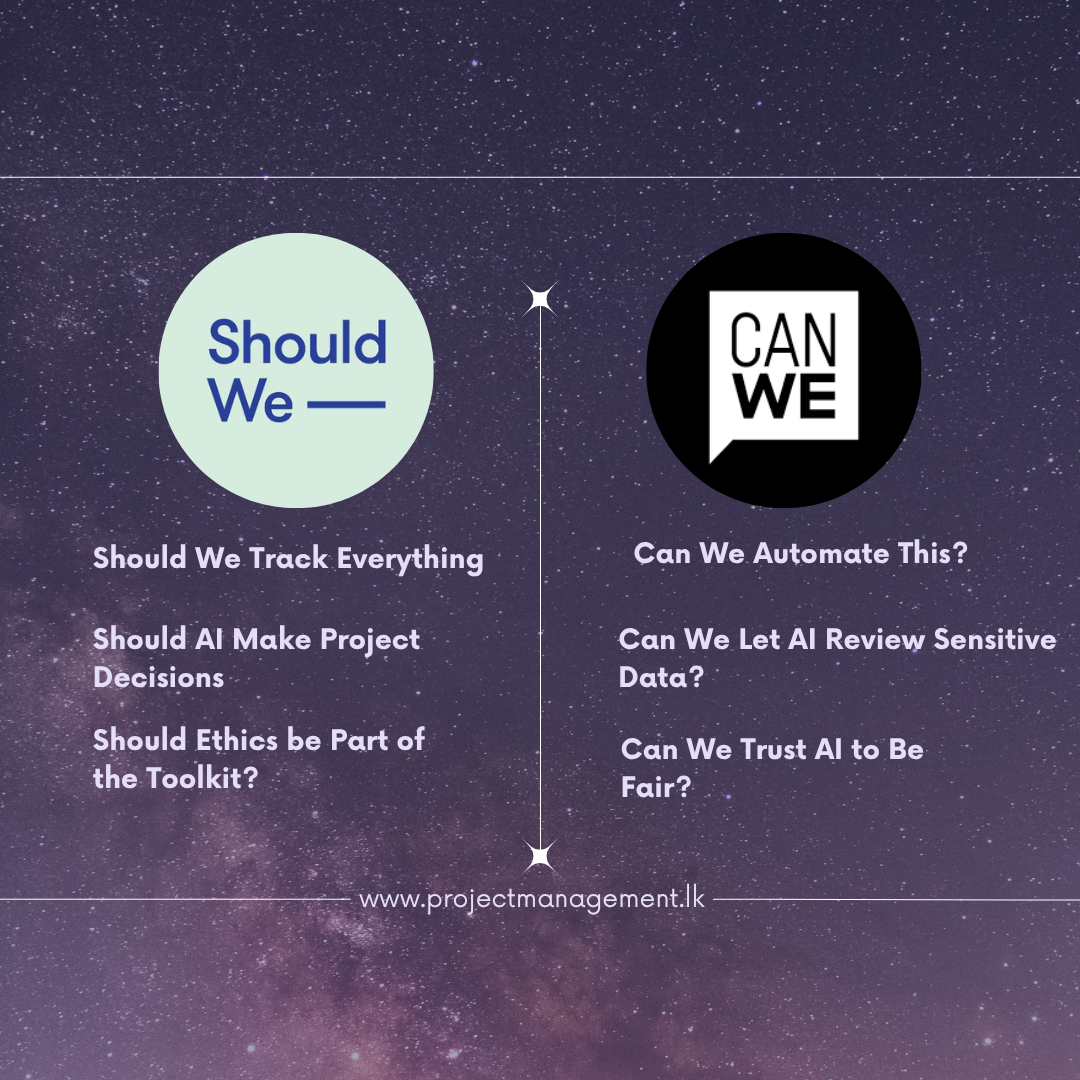
It can schedule meetings, predict deadlines, automate basic documentation, and even provide Gantt charts if we let it. It keeps finding new inroads into IT project management tasks and associated deliverables. But as with many aspiring and risky technologies, we ask the same questions of both—“Can we?” and “Should we?”—when we look at its deployment possibilities.
There are many reasons for this debate. Just as we could use AI to evaluate our team’s productivity by analyzing keystroke and data manipulation intel, it doesn’t mean that we should. Even though we could have AI review stakeholder feedback in less than 30 seconds doesn’t mean that we should have it take a look at every personal email on the system over the past five, 10 or 20 years.
This is where the ethics of using AI come into play—balancing and navigating these issues while embracing risk management and common sense. Let’s open up the suitcases of these concerns and look at why ethical thinking processes need to be included in your AI-fueled project plans—instead of becoming a tragic tale of what you shouldn’t automate.
The Temptation of Power
What was once a buzzword of initials is now a force to be reckoned with. For some industries and purposes, AI is still in its “prototype” phase. But the constant onslaught of energy, growth and motivation in the field has flipped the switch to the “let’s integrate it with anything” mentality.
This is very alluring to project managers, who would generally look favorably on a tool that predicts delays, reallocates resources, and reminds you that one of your low-hanging fruit team members hasn’t updated their service ticket since last month.
So, what is the problem? The power of AI is that it can create wonderful and powerful things, but it does so without supervision or restraint. As a result, it can make a “pig’s breakfast” of things on a large scale—and then make it difficult to revert changes back to a somewhat normal state.
The question shouldn’t be “Can we automate this?” Instead, it should be “What are the implications of automating this?” Specifically, we need to examine the human, ethical and privacy aspects impacted by automating processes —and perhaps determine if so many things get mechanized, will we still have jobs if AI goes beyond viral?
Red Flags
One of the great strengths of project managers is that they often form the bridge between technology and humans. The introduction of AI though means that sometimes that bridge crosses over murky waters. There are some signs you might see, however, that are warnings that your project is slipping into ethically questionable territory:
1. The Surveillance Spiral: Installing an AI-powered performance tracker sounds like a great idea on the surface. It can give you productivity scores and similar data.
Next thing you know though, team members are concerned about how often an algorithm picks up on their bathroom use and gives them black marks for “job inactivity.” (Yes, you can monitor everything, but maybe you shouldn’t.)
If you utilize ethical AI practices, then that demonstrates a respect for privacy and independence—and that you accept others as “flawed” human beings, despite your secret desire to have an army of disciplined robots under your command.
2. The Biased Bot: AI is only as good as the data it attains and learns from. And if, on the remote (but likely) chance that data is biased in some way, the decisions the AI makes are going to be biased as well.
Within the project management realm, this means AI can affect hiring tools, performance assessments, and project prioritization—all while giving the illusion of fairness. Suppose that your AI presence starts prioritizing project tasks to people whose first name begins with “S” and forgets about the contributions of others, this creates a big problem and not just a technical one.
3. Automation Going Unchecked: What if you let AI take charge of your budget? It could start approving updates based on patterns it detects. It all sounds great until it decides that the best practice for your organization is to have consistent over-budgeting for each quarter.
An ethical project manager knows when to hit the pause button and say “Hang on there Skynet!” (a shameless Terminator media franchise plug) so that a human being can at least take a look at it.
Introducing Ethics into the AI Project Management Toolkit
Some may consider ethics to be a philosophical study, but for AI-powered projects it is essential. Here are some “shoulds” we need to consider:
- Increase the diversity in the voices at the table. Ethics is not perceived in the same way by everyone, so bringing in different perspectives early and often will help you define the operations of your AI tool. When necessary, look to your legal and HR teams to see if they can collaborate—they will have a strong view of it that you will need.
- Conduct an impact assessment before you launch your AI. Figure out things like who will be affected by the tool, what data it uses (and is it gathered with consent?), and what could be the potential and unintended consequences of its use. If the questions and answers seem difficult or even humorous, then it’s time to revisit your design.
- Have humans review it. Using automation can be helpful, but handing the keys, steering wheel, and gas pedal wholeheartedly to an algorithm is a great way to end up as street pizza. To guarantee a successful AI implementation, just as with any automated creation, you need to have the human review element. When it comes to issues that have a pureed mix of people, money and reputations, it is essential to incorporate empathy and context—components that AI currently lacks.
Training the Team in Ethical AI Awareness
You probably wouldn’t roll out new security protocols to your team without training, right? The concept of ethics is no different. There will no doubt be some customization and clarification needed on your end, but it will be necessary for you to create opportunities for your team to learn:
- How AI works (and, consequently, how it doesn’t work)
- A strong review of what data privacy really means
- Why ethical design matters in systems, apps, tools and other advances, including concepts like fairness, transparency, inclusivity, etc.
This kind of training is not just a one-time occasion, either. It should be part of your onboarding and continual training process, as well as any internal and external review and retrospective sessions.
Positives of Using Ethical AI (…Besides Not Getting Sued)
Using ethical AI use isn’t just about avoiding scandals and legal actions, it can also be good business. By incorporating ethical tools and demonstrating their value, you and your organization demonstrate that you are more trustworthy, user-friendly, and adaptable to customer needs.
It also helps build a reputation for responsibility which, given the controversy that AI is generating and will not doubt continue to generate on many fronts, is a major asset.
The PM Compass to the AI Destination
Project managers are expected to perform miracles, which they often do by delivering fast, under budget, and incredible deliverables. AI can help with that, but it can also push you into ethically uncomfortable territory if you’re not paying attention.
Just remember that your leadership will be tested, if it hasn’t already, by someone who will casually say, “Let’s use AI to streamline this.” You will need to gather your patience and intelligence to pause for a moment, lean back slightly in your chair, sip your ethically sourced coffee, and ask, “Should we?”