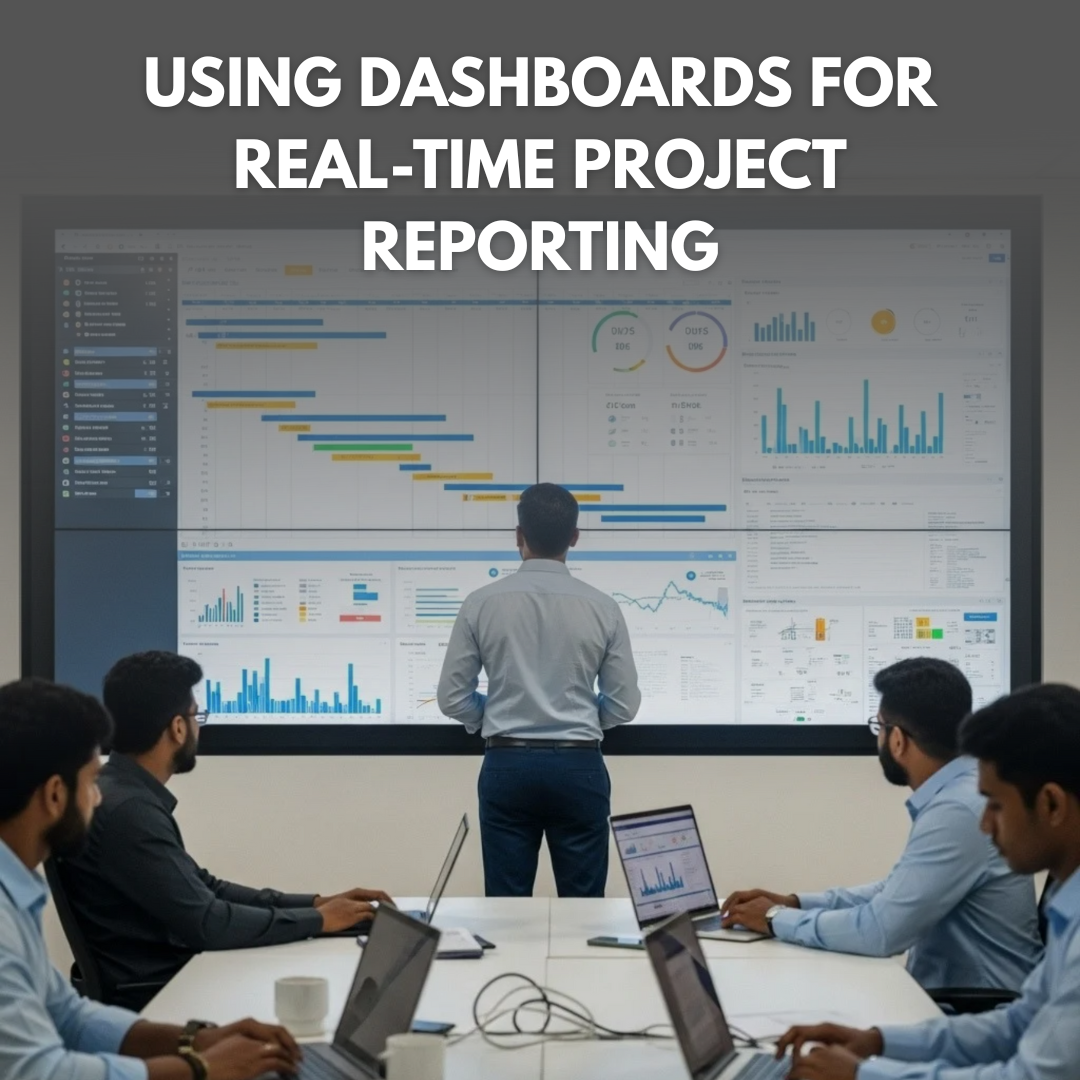
In today’s fast-paced project environments, real-time dashboards have become essential tools for effective project management. Traditional reporting methods using static spreadsheets or monthly summaries often fail to capture the dynamic nature of project progress. Dashboards, however, provide a clear, visual and constantly updated view of key project metrics, helping teams make informed decisions quickly. As projects grow in complexity, real-time reporting has become a necessary practice rather than an optional enhancement.
A major benefit of real-time dashboards is the centralization of project data. Dashboards consolidate information on cost, schedule, risks, resources and quality into a single interface. This eliminates the need to search through emails or multiple software systems. Modern tools such as Power BI, Tableau, Jira, Asana and Monday.com offer robust integrations that pull live data from various project sources. As a result, all stakeholders-managers, clients and team members-gain access to accurate and synchronized project information.
Dashboards greatly improve transparency across project teams. Instead of waiting for weekly or monthly reports, stakeholders can instantly view progress, delays or cost changes. Tools like Microsoft Project Online and Primavera P6 EPPM give stakeholders direct access to updated Gantt charts, earned value metrics and resource allocations. This level of visibility builds trust and encourages open communication, reducing the chances of misunderstanding or hidden issues.
Real-time dashboards are particularly effective for early issue detection. Deviations in cost, delays in activities or unresolved tasks are immediately highlighted through visual indicators. For instance, Jira dashboards can reveal bottlenecks in software development workflows, while Primavera P6 dashboards show activities slipping on the critical path. This immediate visibility allows project managers to take corrective action before small problems escalate into major disruptions.
Another significant advantage is enhanced resource management. Dashboards provide live updates on labor distribution, equipment allocation and workload balancing. Tools like Asana and Monday.com show resource availability and workload heat maps, helping managers identify overutilization or underutilization. In construction and engineering settings, Primavera P6 excels in resource forecasting and leveling, ensuring manpower and equipment are used efficiently.
Dashboards also strengthen collaboration. Modern tools seamlessly integrate with communication and cloud platforms. For example, Power BI dashboards can be viewed directly within Microsoft Teams, while Trello and Notion update dashboards automatically when tasks change status. This ensures every stakeholder-whether on-site or remote-works with the same up-to-date information, creating a more aligned and collaborative environment.
From a strategic perspective, dashboards help leaders make informed long-term decisions. Analytics tools like Power BI and Tableau can track trends, forecast future risks and display performance patterns over time. Project management tools such as Microsoft Project and Primavera P6 automatically calculate earned value metrics, giving managers insight into schedule variance, cost variance and productivity trends. With access to predictive insights, organizations can shift from reactive responses to proactive planning.
Dashboards also simplify documentation and reporting. Instead of manually preparing lengthy reports, teams can export visuals and data summaries directly from dashboard tools. Power BI, for example, can automate the distribution of scheduled reports, save time and ensure accuracy. This automation reduces the administrative burden on project managers, allowing them to focus more on leadership and problem-solving.
Moreover, dashboards support continuous improvement by preserving historical performance data. Organizations can analyze recurring cost overruns, delay patterns, resource inefficiencies or communication gaps. Tools like Jira, Microsoft Project and Primavera P6 store detailed project histories that help teams refine processes and improve accuracy in future planning. Over time, dashboards become a powerful learning tool that supports greater organizational maturity.
In conclusion, dashboards for real-time project reporting have transformed modern project management by offering speed, accuracy and visibility. With the support of advanced tools such as Power BI, Jira, Primavera P6, Microsoft Project, Trello, Asana and Monday.com, teams can monitor performance instantly, identify issues early, manage resources effectively and make strategic decisions based on data. As the demand for efficiency and accountability increases, real-time dashboards provide a crucial advantage, helping organizations deliver projects on time, within budget and with improved control and confidence.