In 2007, while working in the vast oil fields of Tengiz in western Kazakhstan, one of our daily discussions had little to do with engineering, construction, or project schedules.
It was about fish.
Among our multinational team was a colleague named Saman. Unlike most of us, he did not eat meat. Fish was his preferred food, and finding it in the remote staff camp was often a challenge. Every few days, he would ask the canteen staff the same question:
“Balik var mı?”
In Turkish and Kazakh, Balik simply means fish.
Sometimes fish arrived from the Caspian Sea. Sometimes frozen supplies came from distant regions. Sometimes there was none at all. During one of these conversations, a local engineer from the Aral region quietly made a comment that remained with me long after the project ended.
“Kazakhstan once had two seas,” he said.
“The Caspian Sea and the Aral Sea.”
Then he paused.
“One survived. One was sacrificed.”
At that moment, the Aral Sea was simply a name on a map to me. Later, when I learned its story, I realized it represents one of the most powerful project management lessons the modern world has ever witnessed.
It taught me that a project is not merely a collection of activities, budgets, schedules, and deliverables.
A project is a life.
And like any life, it exists within a larger environment.
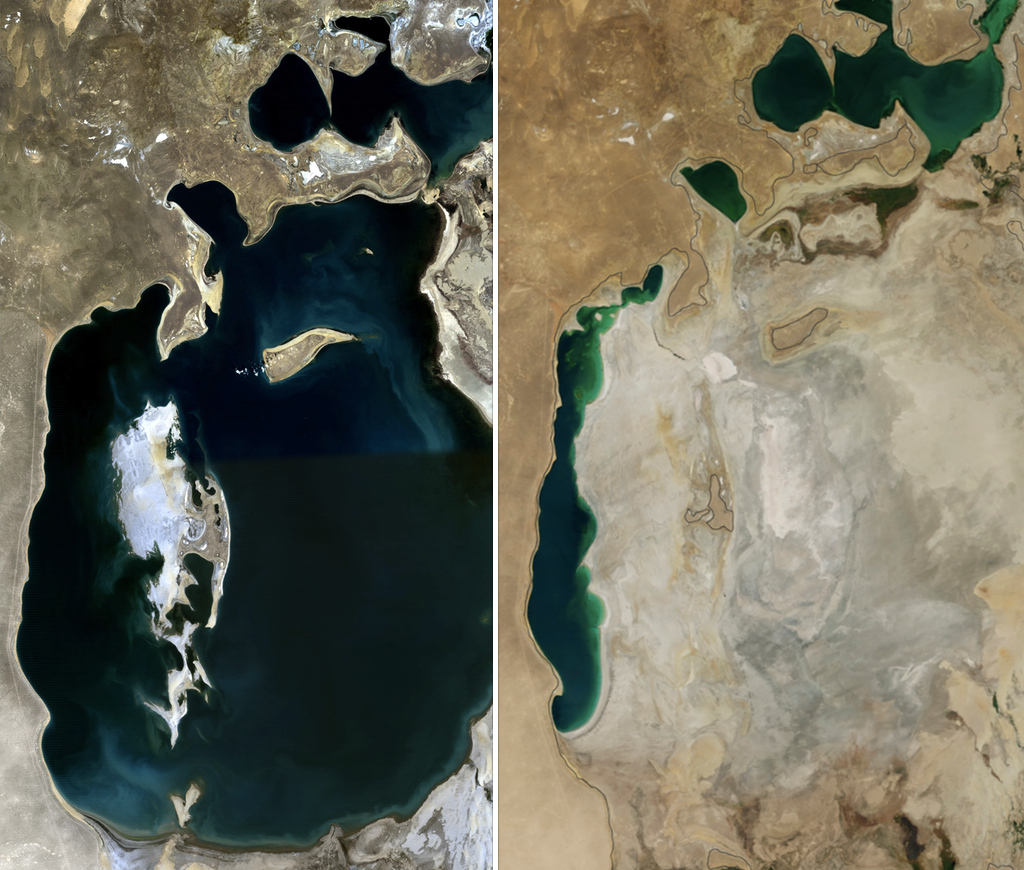
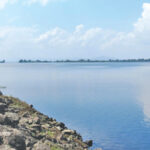
The Aral Sea, located between Kazakhstan and Uzbekistan, was once the fourth-largest inland lake in the world. It covered nearly 68,000 square kilometres and supported thriving fishing communities, busy ports, fish-processing industries, and unique ecosystems. Thousands of families depended on it for their livelihoods.
For generations, the sea appeared permanent.
Then came a development vision.
During the 1960s, Soviet planners sought to transform Central Asia into one of the world’s largest cotton-producing regions. To achieve this objective, enormous irrigation systems were constructed across deserts and agricultural lands. The two great rivers feeding the Aral Sea—the Amu Darya and the Syr Darya—were diverted to support this ambitious agricultural programme.
From a traditional project perspective, the initiative appeared successful.
New irrigation canals were built.
Agricultural production increased.
Cotton output expanded dramatically.
Targets were achieved.
Yet something important had been overlooked.
The external environment.
The rivers feeding the Aral Sea were not simply water sources. They were part of a much larger interconnected system involving ecosystems, local communities, fisheries, climate patterns, public health, and regional economies.
The project delivered its immediate objectives but failed to understand its broader impacts.
Year after year, the sea began to shrink.
Initially, the changes were hardly noticeable. Then the shoreline started moving away from the ports. Fishing boats became stranded on dry land. Salinity levels increased. Fish populations collapsed. Entire fishing communities lost their livelihoods.
Eventually, satellite imagery revealed a shocking reality.
A vast inland sea had nearly disappeared within a single human lifetime.
Today, many former ports lie dozens of kilometres from the water’s edge. Rusting fishing vessels sit abandoned in the desert as monuments to a vanished ecosystem. The exposed seabed has become a new desert known as the Aralkum.
The consequences extended far beyond the loss of water.
Salt, agricultural chemicals, and pollutants accumulated on the dried seabed. Winds carried toxic dust across towns and farmlands. Health problems increased. Agricultural productivity declined. The local climate became harsher, with hotter summers and colder winters.
What makes this story particularly significant is that the disaster was not caused by war, earthquakes, or natural catastrophes.
It was caused by decisions.
Planning decisions.
Engineering decisions.
Management decisions.
In project management, we frequently discuss stakeholder engagement, risk management, sustainability, benefits realization, and systems thinking. The Aral Sea demonstrates what can happen when these principles are ignored.
A project does not exist in isolation.
Every project interacts with its environment.
Every decision creates consequences.
Every deliverable influences stakeholders beyond the immediate project boundary.
This is why I often say that a project is a life.
Just as a human being cannot survive without understanding family, society, nature, and relationships, a project cannot succeed by focusing only on its internal objectives. It must understand the world around it.
Modern project management frameworks increasingly recognize this reality. Sustainability, environmental responsibility, social impact, governance, and long-term value creation are becoming central elements of successful project delivery.
The story of the Aral Sea illustrates why.
Interestingly, the same engineering profession that contributed to the problem is now helping to restore part of what was lost.
In Kazakhstan, the construction of the Kok-Aral Dam, supported by the World Bank, successfully separated the North Aral Sea from the heavily damaged southern basin. Water levels have risen. Salinity has reduced. Fish populations have partially recovered. Some fishing communities have regained hope.
Meanwhile, large-scale environmental programmes continue across the former seabed. Millions of drought-resistant saxaul trees are being planted to reduce dust storms and stabilize the soil.
These efforts demonstrate another important project lesson.
Not every mistake can be fully corrected.
Some can only be mitigated.
Some become permanent scars.
And some require generations of effort to recover from.
Today, the world faces growing challenges related to climate change, water scarcity, environmental degradation, and sustainable development. The Aral Sea remains a reminder that success cannot be measured solely by immediate outputs and short-term benefits.
True success must also consider long-term consequences.
Whenever I remember those evenings in Tengiz, listening to Saman searching for “Balik,” I think about that vanished sea.
A sea disappeared.
A desert emerged.
And humanity is still trying to reverse decisions made decades ago.
Perhaps that is the greatest lesson of all.
Projects are not machines.
Projects are living systems.
They interact with people, communities, economies, and nature.
A project is a life.Life is a project.
And like life itself, its future depends on how well it understands and respects the environment in which it exists.