Projects are not managed in a world of certainty. Even the best project plan is built on assumptions: that people will be available, approvals will arrive on time, suppliers will deliver, users will cooperate, budgets will hold, and technology will work as expected. Some of these assumptions will be correct. Some will not. The real work of project management is often about noticing the difference early enough to act.
This is why risk, uncertainty, and decision-making sit at the centre of project leadership. A project manager does not simply follow a plan. They constantly interpret signals, assess trade-offs, and help the right people make the right decisions at the right time.
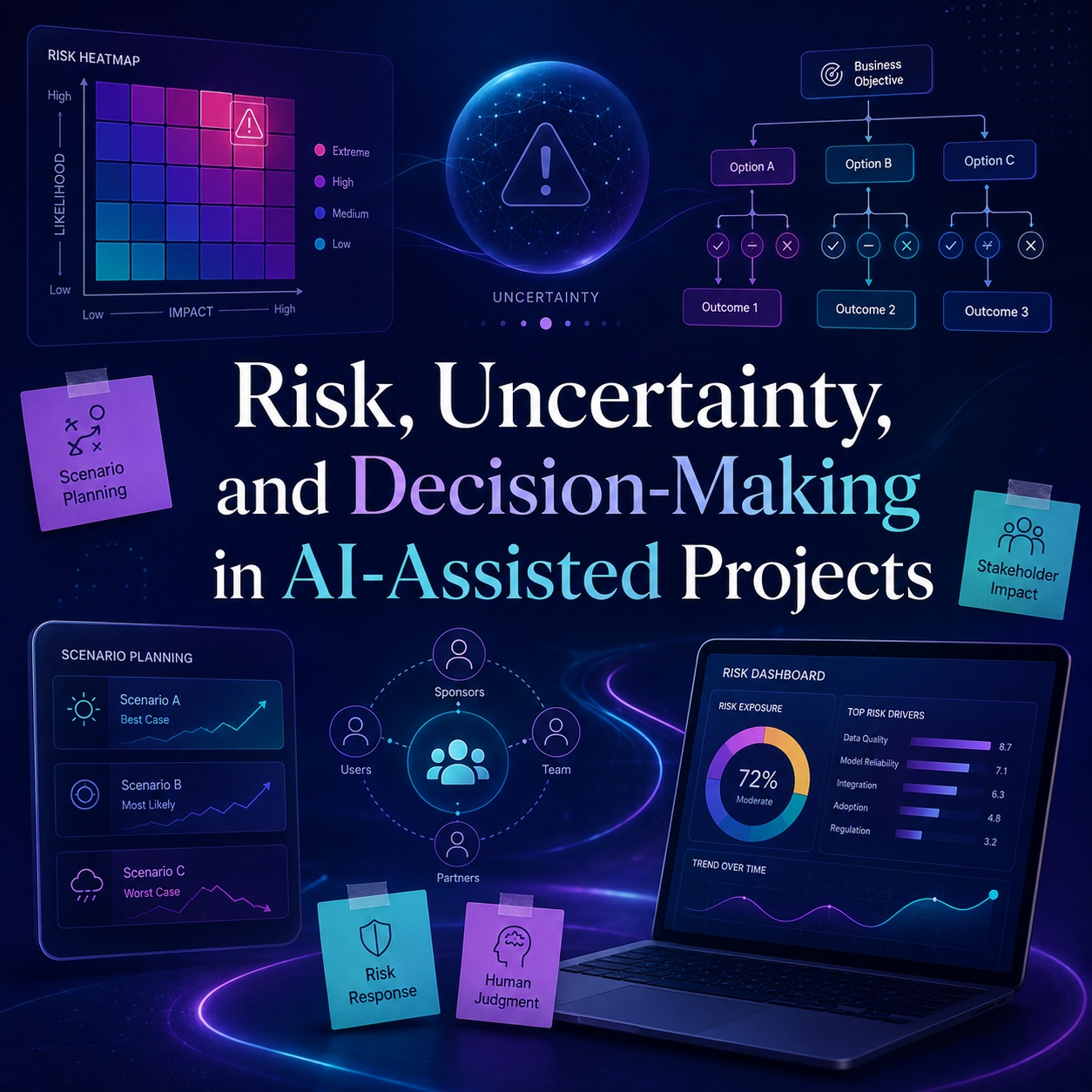
Generative AI can support this work in useful ways. It can help project teams identify possible risks, organise them into categories, suggest mitigation actions, and prepare decision briefs. It can also help teams think through scenarios: What happens if a key supplier is delayed? What if the budget is reduced? What if user adoption is slower than expected? What if a technical dependency fails?
These questions are valuable because many project risks are visible before they become problems. They are often hidden in meeting notes, repeated delays, vague commitments, or unresolved decisions. AI can help surface patterns and ask questions that the team may have missed.
For example, if a project has repeated approval delays, AI can help highlight this as a governance risk rather than treating each delay as an isolated issue. If several tasks depend on a single specialist, it may indicate a resource concentration risk. If the scope keeps changing in small ways, it can help frame that as a scope control issue. These insights are useful because they move the conversation from symptoms to causes.
AI can also help improve decision preparation. In many projects, decisions are delayed not because people are unwilling to decide, but because the options are unclear. GenAI can help summarise the background, list possible options, compare advantages and disadvantages, identify assumptions, and prepare a concise decision note for management or a steering committee.
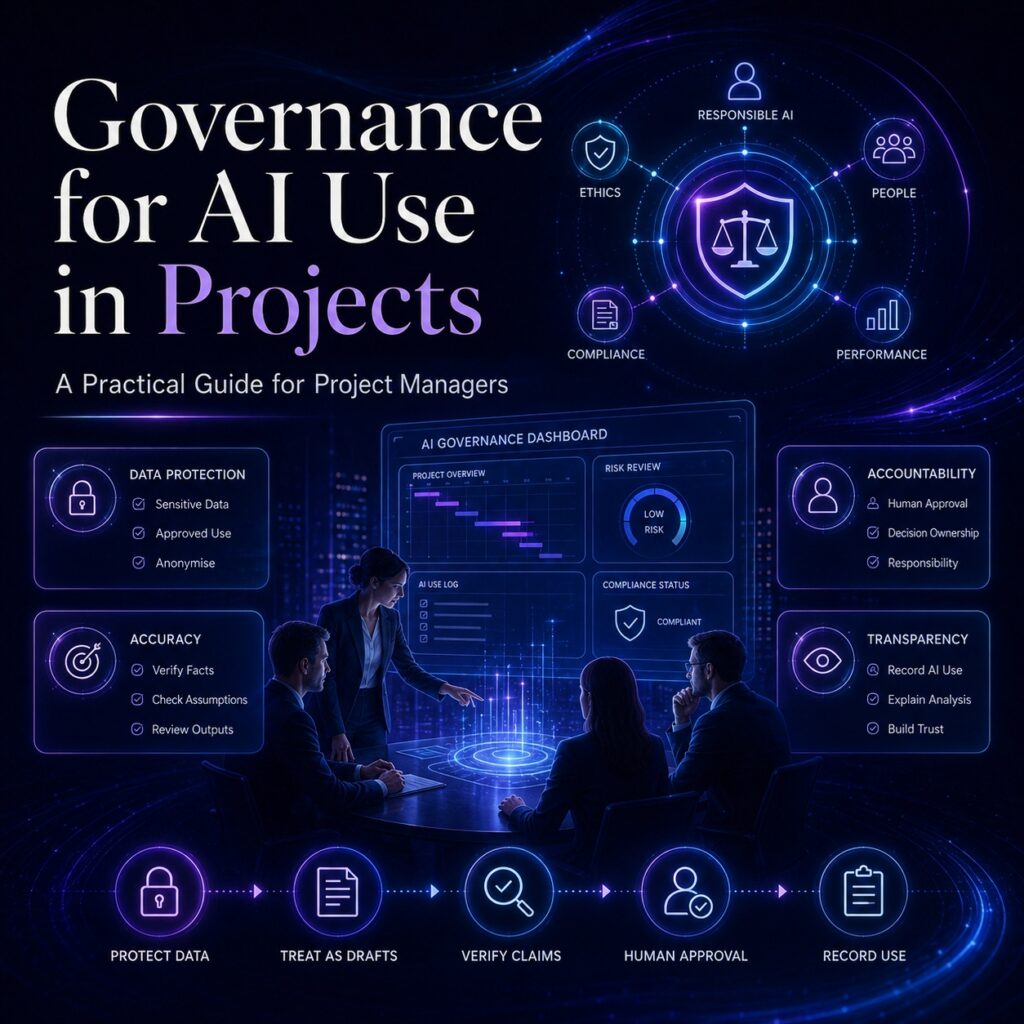
But this is where caution is important. AI can support decision-making, but it should not become the decision-maker. A decision in a project is not only a logical choice between options. It may involve organisational politics, stakeholder expectations, timing, relationships, reputational risk, and long-term consequences. These are areas where human judgment remains essential.
AI may also give a false sense of confidence. A well-written risk analysis can look convincing even when the underlying information is incomplete. A decision matrix can appear objective even when the criteria are poorly chosen. A scenario analysis can be useful, but it is only as good as the assumptions behind it. Project managers must therefore ask: What information did we use? What context is missing? Who should review this? What could AI be overlooking?
The best use of AI is as a thinking partner. It can help widen the view, challenge assumptions, and structure discussion. It can ask, “What could go wrong?” It can ask, “Who is affected by this decision?” It can ask, “What evidence supports this option?” These questions can improve the quality of project conversations.
Still, accountability cannot be outsourced. If a project decision causes a delay, a cost increase, a quality failure, or stakeholder dissatisfaction, the explanation cannot be that an AI tool suggested it. The project manager and decision-makers must own the process and the outcome.
In AI-assisted project management, risk management should become more active, not more automated. AI should help teams think earlier, wider, and more honestly about uncertainty. It should help create better inputs for human decisions.
This matters because risk management is not a separate document at the end of planning. It is a continuous habit of asking what has changed recently and why.
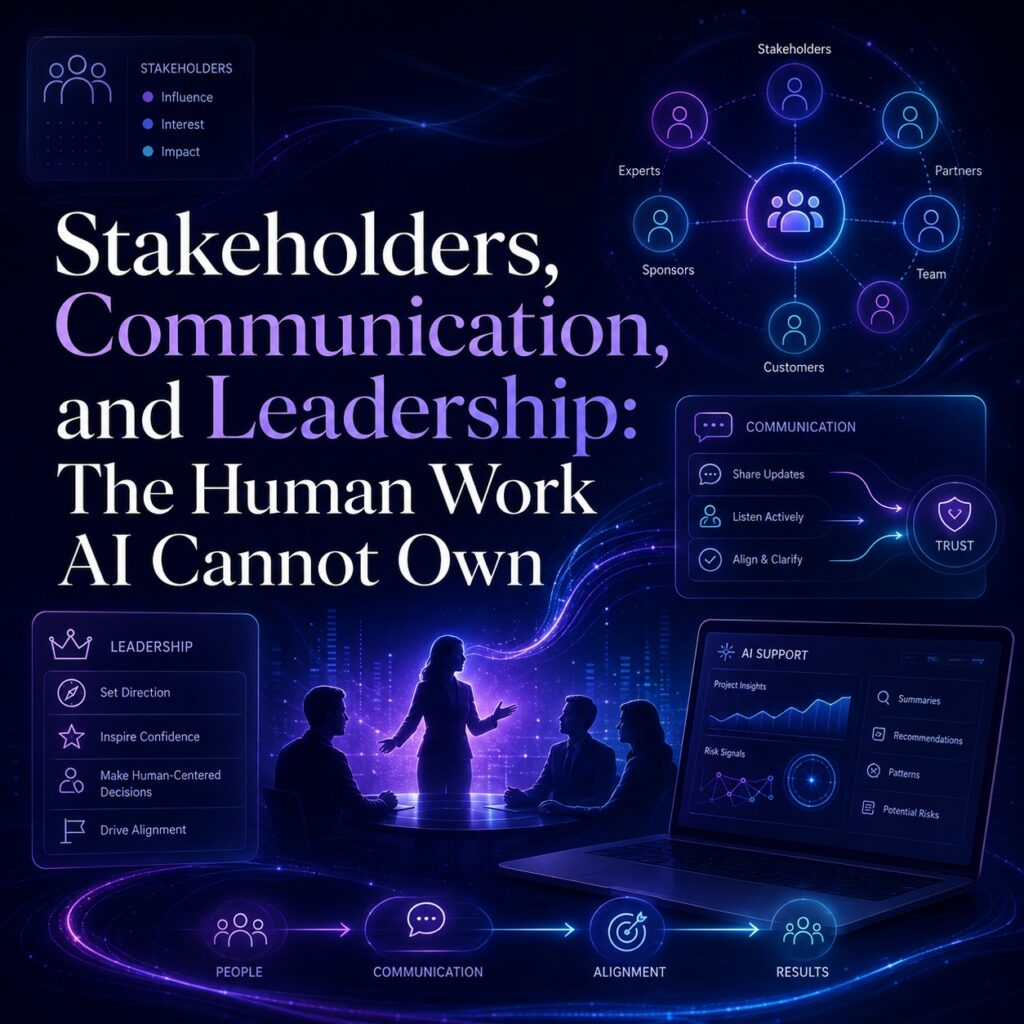
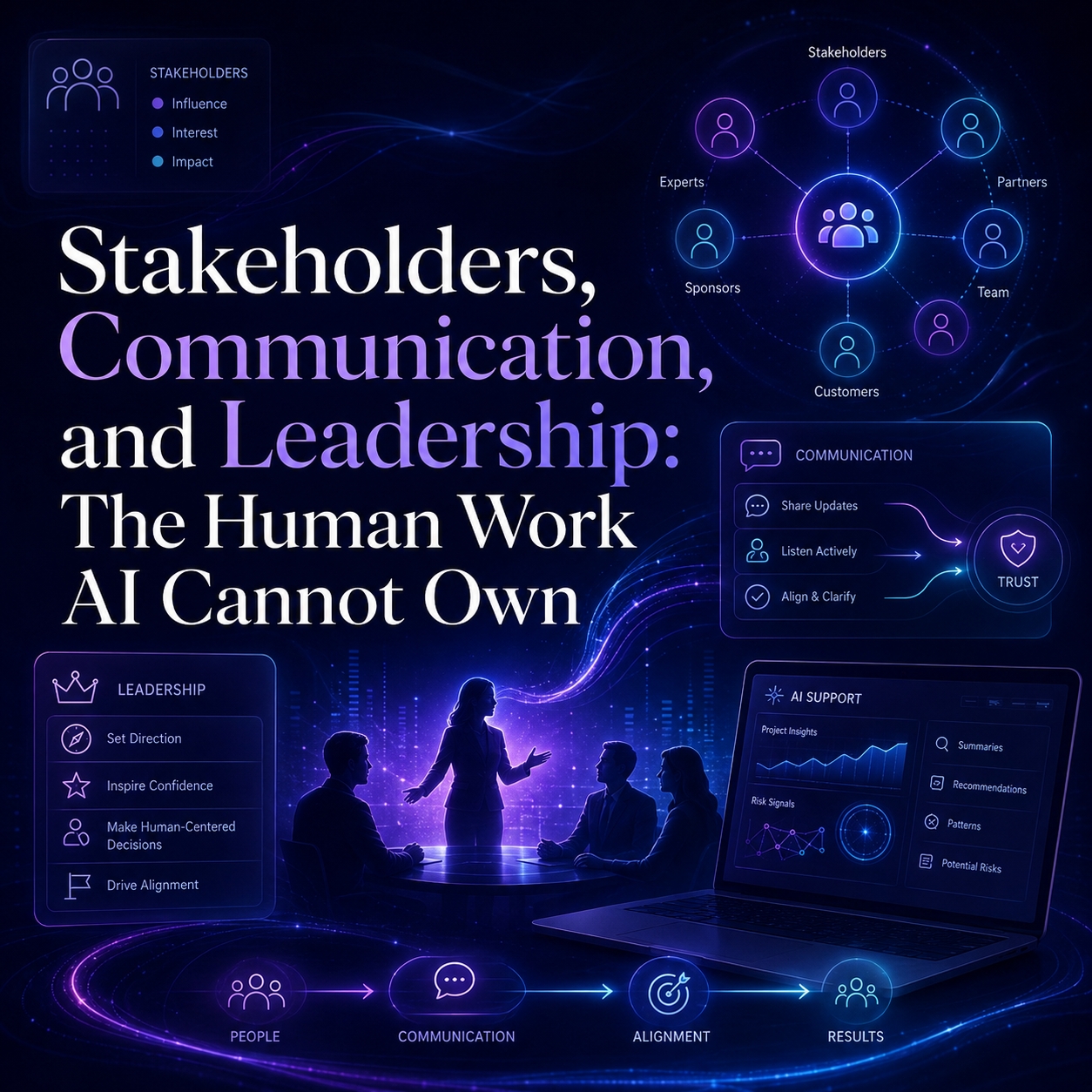
The project leader’s role is to combine AI-supported analysis with experience, context, and responsibility. That combination is important. AI can help us see more possibilities, but people must still decide what matters, what is acceptable, and what action should follow.
In the end, successful projects are not built on certainty. They are built on disciplined thinking, timely decisions, and responsible leadership. AI can strengthen all three if we use it carefully.