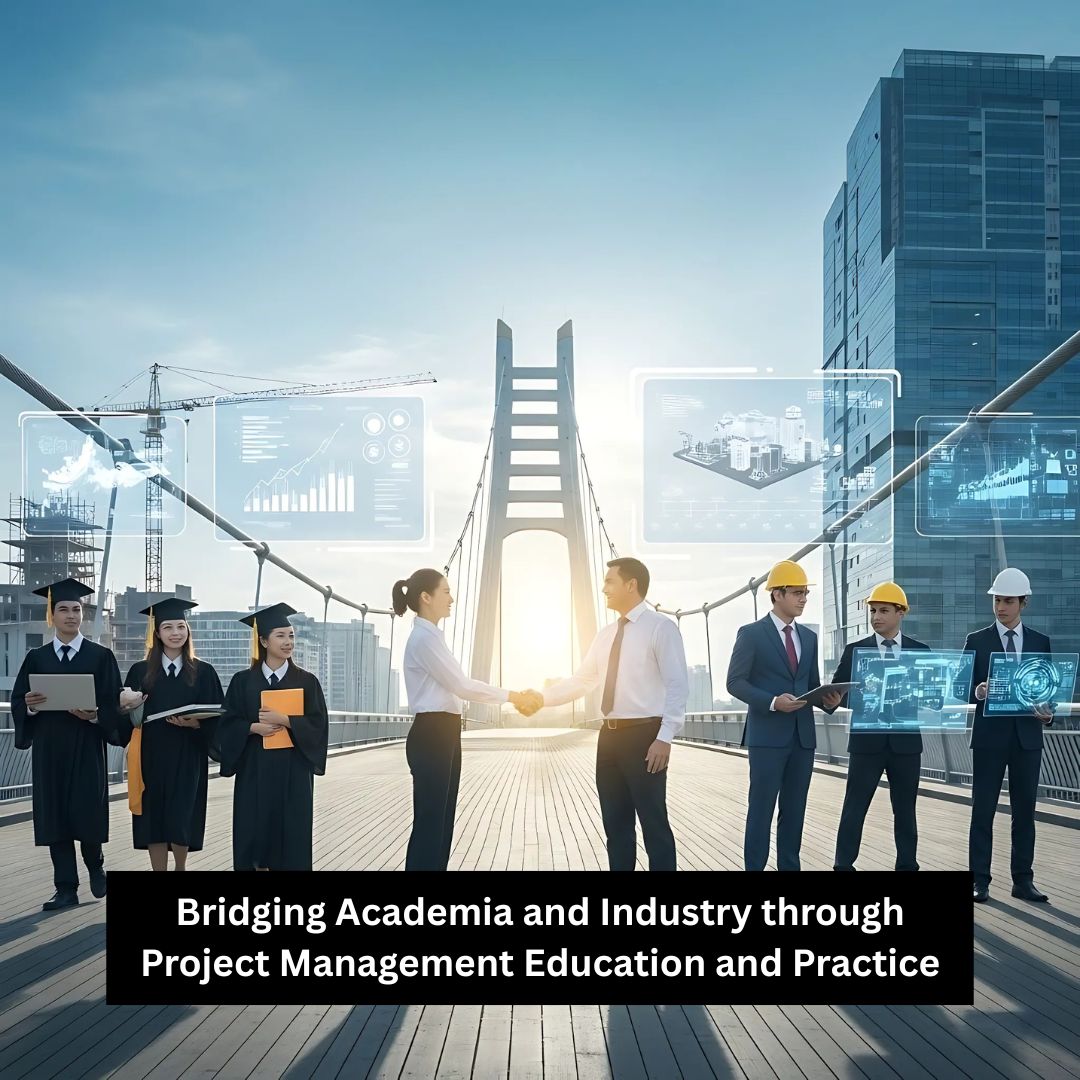
Bridging Academia and Industry through Project Management Education and Practice
Project Management (PM) is a cornerstone for delivering successful outcomes in any sector, be it construction, IT, education, or manufacturing. My journey in project management began with my undergraduate studies at the University of Moratuwa and has since evolved through research, industry exposure, and educational development efforts.
After completing my Bachelor’s degree, where I focused heavily on project management subjects, I progressed to pursue an MPhil at the Construction Engineering and Management Division of the University of Moratuwa. This research-based degree not only allowed me to delve deeper into PM theory and practices but also opened the door to contribute to a unique industry-academia collaborative initiative, an online learning platform for project management.
This platform, developed as a collaborative initiative, is titled “Project Management Skills Program”, and was designed in alignment with the Exam Content Outline released in October 2022 for the Certified Associate in Project Management (CAPM) qualification by the Project Management Institute (PMI), USA. What makes this initiative truly impactful is that it is offered completely free of charge. The primary goal is to enhance access to quality PM education across Sri Lanka and help prepare students and early-career professionals for globally recognized certification.
The project is structured into two main phases. The first phase involves delivering the content as Audit Courses, offered as non-credit training programs aimed at equipping learners with foundational knowledge and practical skills in project management. These are currently being accessed by university students, graduates, and working professionals alike.
The second phase, currently under development, aims to convert these into Credit Courses. These will include structured assessments, exams, and certifications to formally recognize the competencies acquired by learners. Upon successful completion, students will be awarded a certificate indicating the earned grade and credit value. While the training material remains free, a nominal fee will be charged for the summative assessments and certification process.
What makes this even more visionary is the long-term goal: to create a stackable Conversion Master’s degree program. Designed at Level 6 of the Sri Lanka Qualifications Framework (SLQF), equivalent to a four-year undergraduate honours degree, this pathway is ideal for students from diverse academic backgrounds (e.g., humanities, commerce, technology, or natural sciences) who have completed a 3-year degree and are looking to specialize in project management. This offers a flexible and inclusive path for individuals to transition into the project management profession and gain eligibility for the CAPM qualification, paving the way for international recognition.
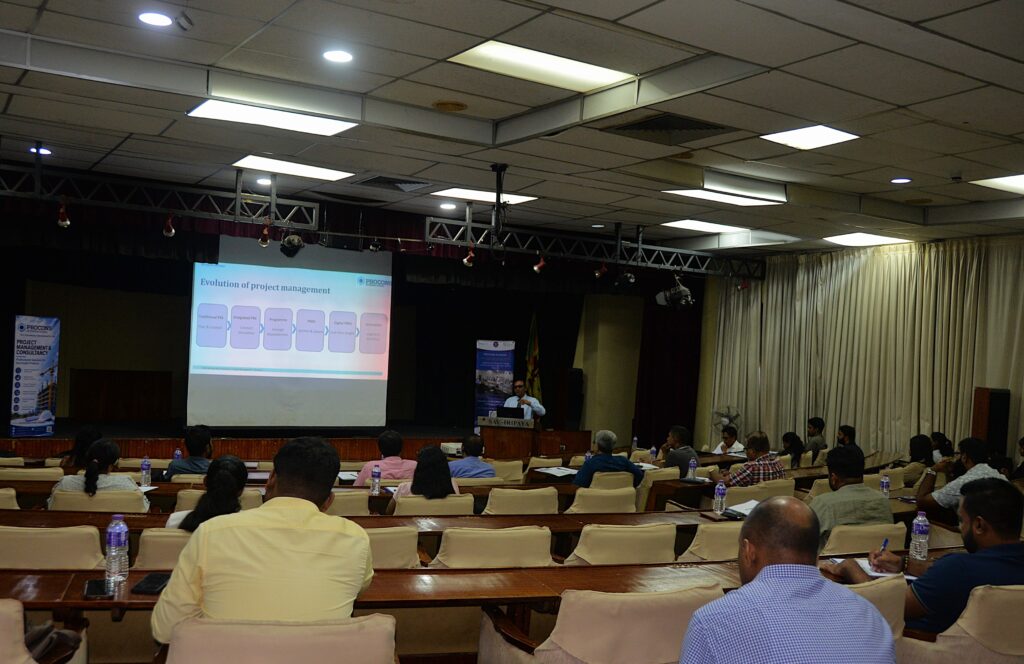
Working on this initiative has been a career-defining experience for me. It enabled me to collaborate closely with industry leaders in project management across Sri Lanka. I developed strong connections with the PMI Sri Lanka Chapter and PROCONS Group (PMI authorized training partner). These interactions enriched my understanding of both traditional and modern project management practices, as well as the challenges and innovations driving project success in real-world scenarios.
My exposure wasn’t limited to academia. I also had the opportunity to gain hands-on experience in the construction industry. During my tenure with Access Engineering PLC, I worked as a Civil Engineer on the Colombo West Container Terminal (CWCT) Project. There, I was deeply involved in project planning and scheduling using Primavera P6, a powerful software tool widely used in the industry. This experience gave me valuable insights into practical aspects of resource management, scheduling, baseline updates, and performance monitoring skills that are essential in large-scale infrastructure projects.
Currently, I serve as a lecturer at the Institute of Technology, University of Moratuwa, where I teach Civil Engineering Management modules for Semester 3 and 4 students. My focus is not just on teaching textbook theories but also on bringing practical industry examples into the classroom to bridge the gap between theory and practice. I emphasize the integration of PM software tools, stakeholder communication, scope management, and risk management strategies into the learning experience, making it more dynamic and industry-relevant.
In parallel, I am actively engaged in research on Digital Twin Technology, an emerging field with significant potential in the construction and project management domains. My current work explores how digital twins can be leveraged to enhance project lifecycle management, monitor sustainability indicators, and reduce risk in construction environments. This area holds immense promise for improving predictive analytics, resource efficiency, and stakeholder collaboration in complex projects.
To conclude, my journey in project management has been shaped by a rich combination of academic rigor, industry exposure, collaborative innovation, and a passion for teaching. I believe that the future of project management in Sri Lanka lies in inclusive education, digital innovation, and stronger academia-industry linkages. Through initiatives like the CAPM-aligned online course and ongoing digital twin research, we are taking meaningful steps toward building a competent, future-ready project management workforce.