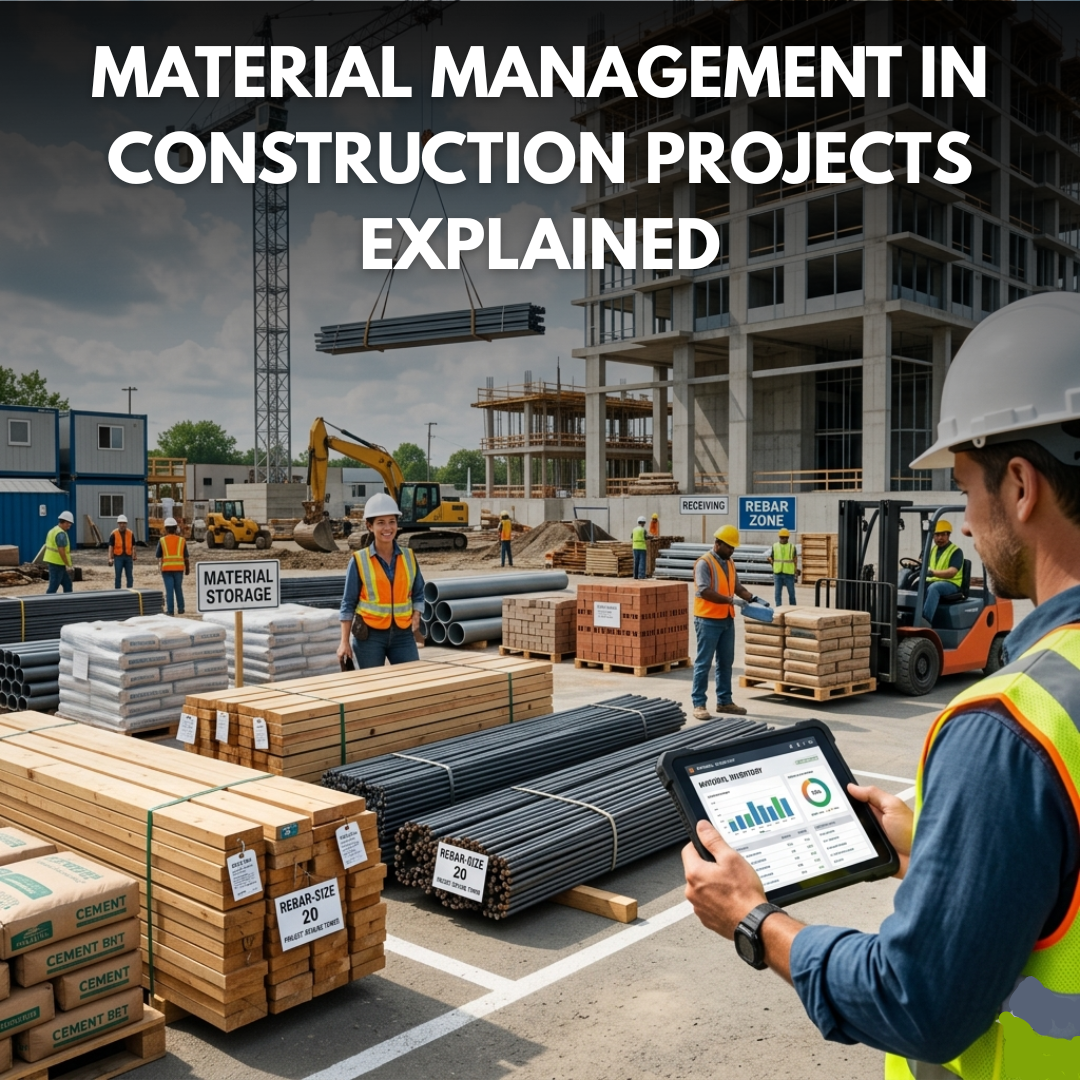
Material management is one of the most important parts of construction project management. In construction projects, materials such as cement, steel, sand, bricks, pipes and electrical items are used in large quantities. Managing these materials properly is essential to complete the project on time, maintain quality and control costs.
In many construction projects, material costs represent a major portion of the total project cost. Poor material management can lead to wastage, delays, shortages and financial losses. Because of this, project managers and site engineers give special attention to material planning, storage and usage throughout the project.
What Is Material Management
Material management is the process of planning, purchasing, storing, handling and controlling construction materials efficiently. The main goal is to ensure that the right materials are available at the right place, at the right time and in the correct quantity.
Good material management helps avoid interruptions to construction activities. It also ensures that materials are used properly without unnecessary wastage.
Importance of Material Management
Material management is very important because construction projects depend heavily on continuous material supply. If materials are not available when needed, work may stop, causing delays in the project schedule.
Proper material management also helps control project costs. Construction materials are expensive and wastage can significantly increase project expenses. By managing materials carefully, contractors can reduce unnecessary losses and improve profitability.
In addition, proper material management helps maintain quality. Using approved and properly stored materials ensures better construction quality and durability.
Material Planning in Construction Projects
Material planning is the first step in material management. Before construction begins, engineers and project managers estimate the quantity of materials required for each activity.
This planning helps ensure that materials are ordered at the correct time. Proper planning also helps avoid excess materials, which can create storage problems and increase costs.
In large construction projects, material schedules are often prepared to coordinate material delivery with the project timeline.
Purchasing and Procurement of Materials
The purchasing process is another important part of material management. Materials must be purchased from reliable suppliers who can provide quality products on time.
Before purchasing, contractors usually compare prices, quality and supplier performance. Proper procurement helps maintain project quality and avoid delays caused by late deliveries.
In some projects, engineers also inspect materials before accepting them on site to ensure they meet specifications.
Material Storage and Handling
Proper storage of materials is very important in construction projects. Poor storage conditions can damage materials and reduce their quality.
For example, cement must be stored in dry conditions to prevent moisture damage. Steel materials should be protected from rust and electrical items should be stored safely to avoid damage.
Material handling is also important. Careless handling can lead to breakage, wastage and safety risks. Workers should follow proper procedures when transporting and using materials on site.
Controlling Material Wastage
Material wastage is a common problem in construction projects. Wastage can occur due to poor handling, improper storage, inaccurate measurements or theft.
To reduce wastage, project teams must monitor material usage regularly. Proper supervision, accurate cutting and careful storage help minimize losses.
Regular site inspections and inventory checks also help identify problems early and improve material control.
Inventory Management in Construction
Inventory management involves tracking materials available on site. Site stores usually maintain records of material receipts, usage and balance quantities.
Good inventory management helps prevent shortages and ensures that materials are available when needed. It also avoids over ordering and unnecessary stock accumulation.
In many modern projects, software systems are used to improve inventory tracking and reporting.
Benefits of Proper Material Management
Proper material management provides many benefits to construction projects. It helps reduce project costs by minimizing wastage and avoiding unnecessary purchases.
It also improves project efficiency by ensuring continuous material availability. This helps maintain smooth workflow and prevents delays.
In addition, proper material management improves quality and safety on site. Well organized storage areas reduce hazards and protect materials from damage.