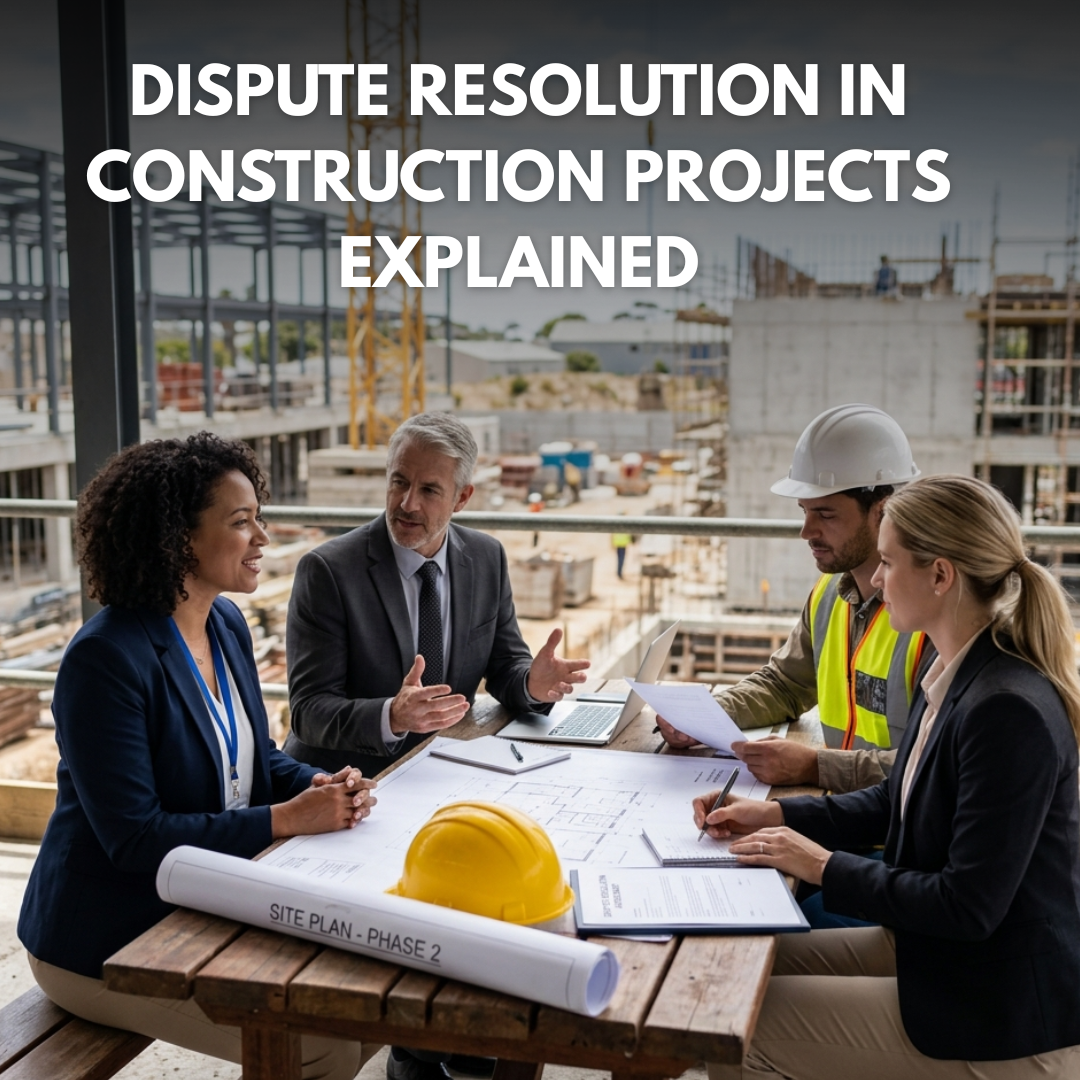
Construction projects involve many parties, including clients, contractors, consultants and suppliers. Because of this, disagreements can sometimes arise during the project. These disagreements are known as disputes. If not handled properly, disputes can lead to delays, extra costs and damage to professional relationships. That is why dispute resolution is an important part of project management.
Understanding how disputes occur and how they can be resolved helps project teams manage problems effectively and keep the project on track.
What Is a Construction Dispute
A construction dispute is a disagreement between parties involved in a project regarding work, payment, time, or contract conditions. These disputes may arise at any stage of the project, from planning to completion.
Common disputes include disagreements over payment amounts, delays in project completion, quality of work and changes to the original scope. If these issues are not addressed early, they can become serious problems.
Common Causes of Disputes
There are several reasons why disputes occur in construction projects. One major cause is unclear contract documents. If the contract terms are not clearly defined, different parties may interpret them in different ways.
Delays in the project are another common reason. When work is not completed on time, disputes may arise about who is responsible. Payment issues, such as delayed or reduced payments, also lead to conflicts.
Variations in the scope of work can create disagreements, especially if they are not properly documented or approved. Poor communication between project teams can also increase the chances of disputes.
Importance of Dispute Resolution
Dispute resolution is important because it helps solve problems quickly and prevents them from affecting the entire project. When disputes are resolved in a professional manner, it saves time, reduces costs and maintains good working relationships.
Proper dispute resolution also helps avoid legal action, which can be expensive and time consuming. It ensures that the project continues smoothly without major interruptions.
Methods of Dispute Resolution
There are several methods used to resolve disputes in construction projects. The first and most common method is negotiation. In this method, the parties involved discuss the issue and try to reach an agreement.
If negotiation does not work, mediation may be used. In mediation, a neutral third party helps both sides find a solution. This process is less formal and focuses on mutual understanding.
Another method is arbitration. In arbitration, an independent person reviews the case and makes a decision that is usually binding. This method is more formal than mediation but faster than going to court.
Litigation is the final option, where the dispute is taken to court. This method is time consuming and costly, so it is usually avoided unless necessary.
Role of Contracts in Dispute Resolution
Contracts play a key role in preventing and resolving disputes. A well prepared contract clearly defines the rights and responsibilities of each party. It also includes procedures for handling disputes.
Standard construction contracts often include clauses for dispute resolution methods such as mediation or arbitration. Following these procedures helps resolve issues in a structured manner.
How to Avoid Disputes
Although disputes cannot always be avoided, they can be reduced by proper planning and communication. Clear contract documents, accurate drawings and detailed specifications help prevent misunderstandings.
Regular site meetings and proper documentation of work progress also help identify issues early. Maintaining good communication between all parties is one of the most effective ways to avoid disputes.
Benefits of Effective Dispute Resolution
When disputes are handled properly, projects can continue without major disruptions. It helps maintain trust between the client and contractor and improves overall project performance.
Effective dispute resolution also saves time and money. It ensures that issues are solved quickly and allows the project team to focus on completing the work successfully.