A project plan is only useful if it remains connected to reality. Many projects begin with reasonable intentions, but once execution starts, information becomes scattered. Some updates are in emails, some in meeting notes, some in spreadsheets, some in people’s heads, and some are never recorded properly. By the time a formal report is prepared, the project may already have moved on.
This is why monitoring and reporting matter. They are not just administrative tasks. They help project managers understand whether the project is on track, where attention is needed, and what decisions must be taken. Good reporting is not about producing attractive documents. It is about creating a shared view of progress, issues, risks, and responsibilities.
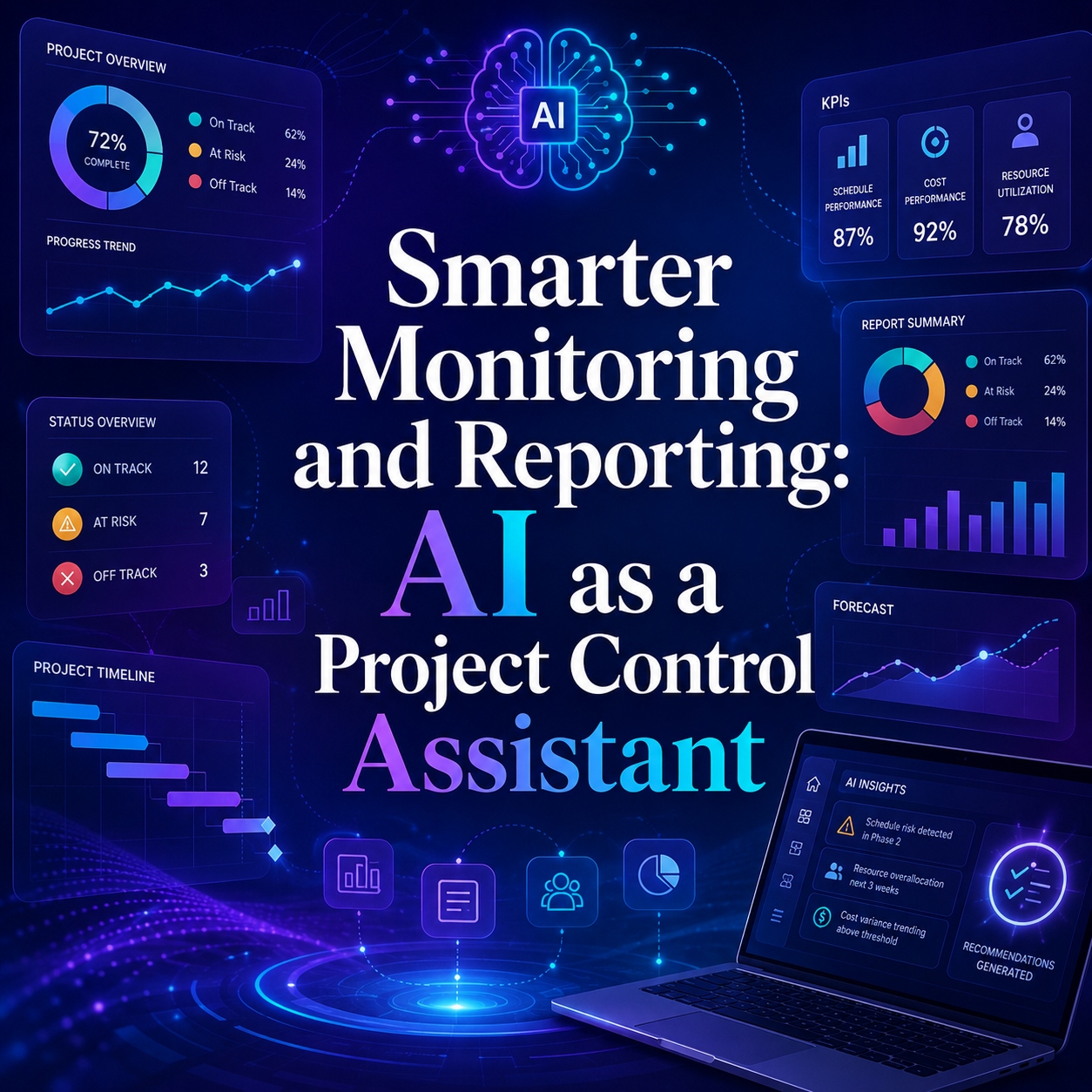
Generative AI can be a useful assistant in this space. It can convert project information into clearer summaries, action lists, status updates, risk notes, and management briefings. For a project manager, this can reduce time spent on documentation and create more time for thinking, follow-up, and decision-making.
One practical use is meeting follow-up. Project meetings often generate useful discussion, but the value is lost if decisions, owners, and deadlines are not captured clearly. GenAI can help summarise meeting notes, extract action items, identify unresolved questions, and prepare follow-up messages. This is useful when teams are working across locations or when stakeholders are involved.
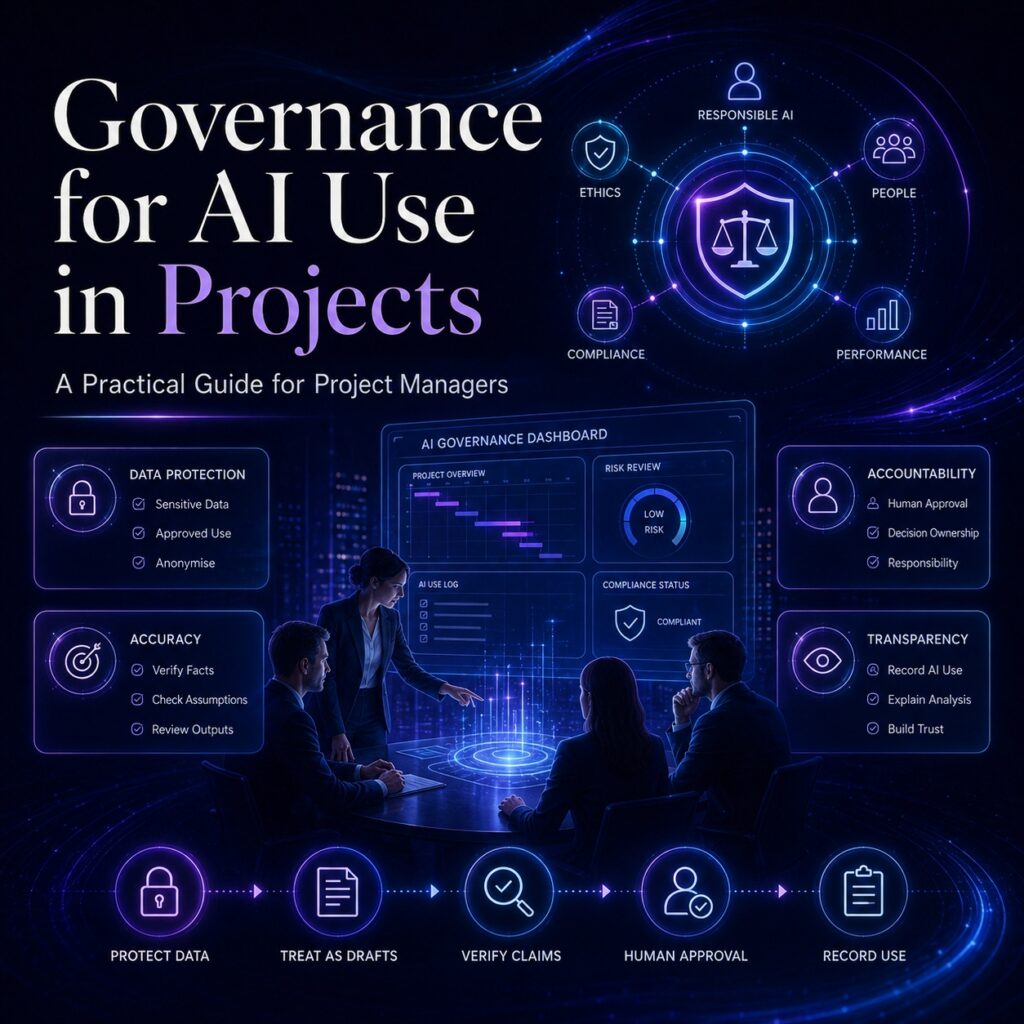
However, the project manager must still verify output. AI may misunderstand a decision, assign an action to the wrong person, or miss a sensitive point. A clean summary is not always an accurate summary. The responsibility for confirming what was agreed remains with the project manager.
Status reporting is another area where AI can help. Many project managers prepare weekly or monthly reports using a similar structure: progress made, planned work, risks, issues, dependencies, budget status, schedule status, and required decisions. GenAI can help draft these reports from available notes and data. It can also adapt the same information for different audiences. A senior management update may need a short decision-focused summary, while a team update may need operational detail.
This does not mean reports should become automated outputs that nobody questions. A project report is a management instrument. It should show the true condition of the project, not simply present a polished version of events. If the underlying information is incomplete or biased, AI will only help produce a polished, incomplete report.
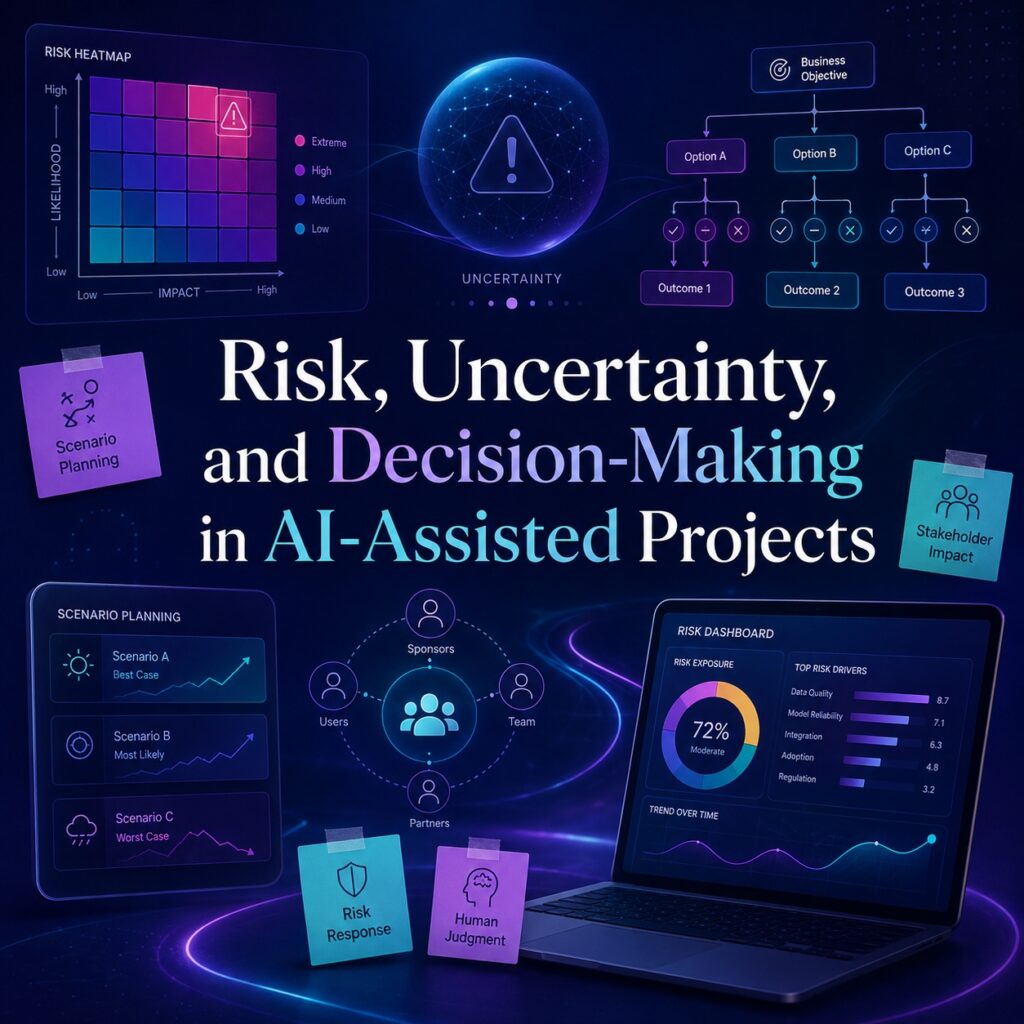
AI can also support issue and risk tracking. It can group related issues, identify recurring themes, suggest risk categories, and ask useful questions. For example, if tasks are delayed due to slow approvals, AI may highlight approval delays as a pattern rather than treating each case individually. This can help project managers move from reporting symptoms to understanding causes.
Another useful area is early warning. If project information is captured regularly, AI tools can help detect inconsistencies, recurring delays, unclear ownership, or unaddressed dependencies. This can support more proactive control. Instead of waiting until a milestone is missed, the project manager may see signs of trouble earlier.
Still, this depends on the quality of project information. AI cannot monitor what is not recorded. It cannot understand hidden tensions, informal agreements, or political constraints unless someone brings that context into the process. Project monitoring still depends on disciplined communication, honest updates, and a culture where problems surface early.
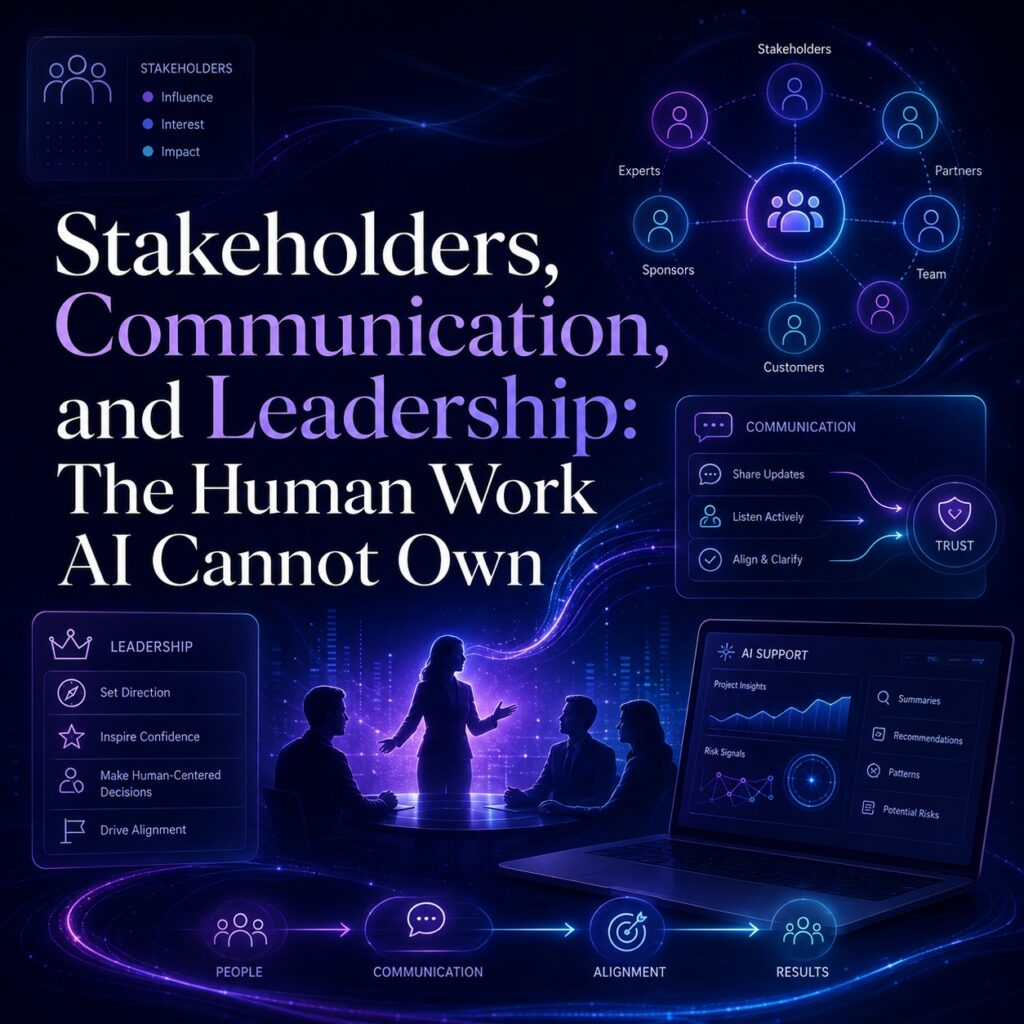
The human role is therefore not reduced. It changes. The project manager becomes less of a manual compiler of updates and more of an interpreter of project signals. AI can help organise the information, but the project manager must decide what it means, what needs attention, and who must act.
Used well, AI can make monitoring and reporting faster, clearer, and more useful. Used poorly, it can create the illusion of control. A project dashboard may look impressive, and a report may read well, but the real test is whether they lead to action.
In the age of AI, project control should not become passive automation. It should become more active, evidence-based, and transparent. AI can support reporting, but leadership is still needed to ask hard questions, follow up on commitments, and keep the project aligned with intended outcomes.