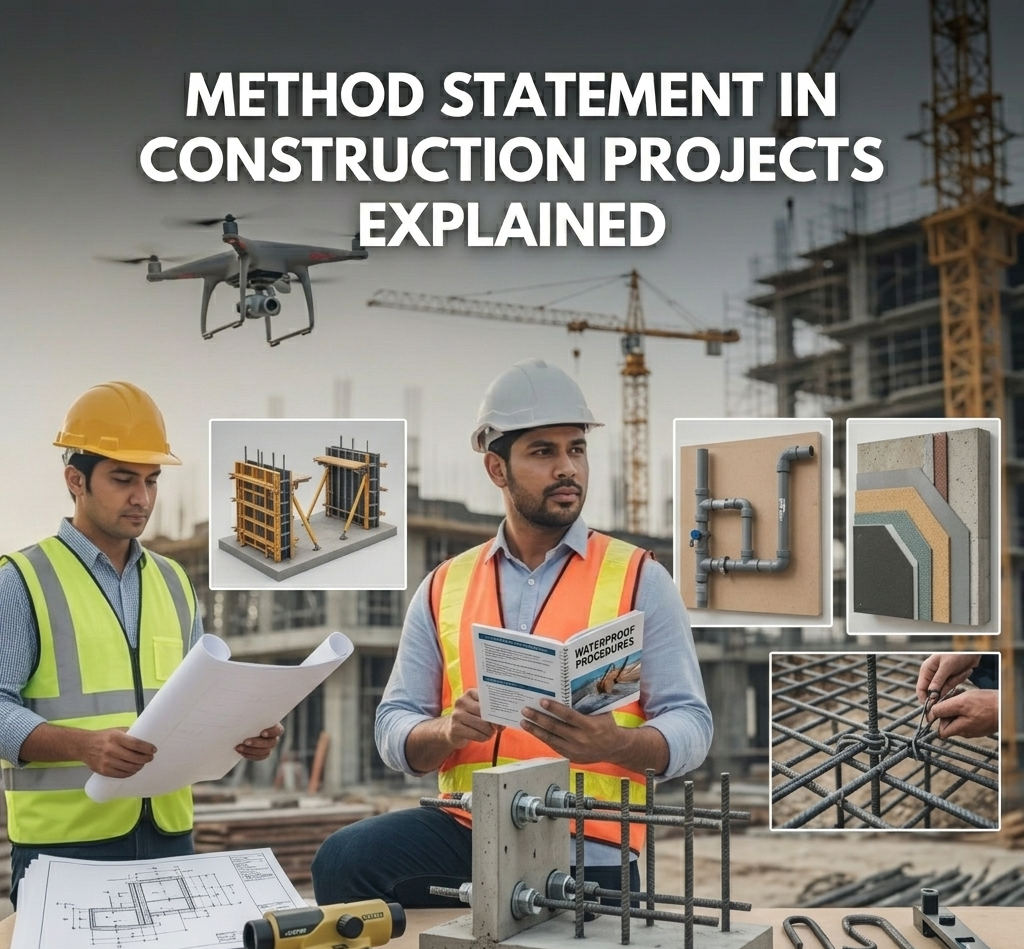
In construction projects, proper planning is very important to complete work safely, on time and with good quality. One of the key documents used in construction sites is the method statement. It helps project teams clearly understand how a specific activity should be carried out from start to finish.
In many construction projects, engineers and contractors use method statements to guide workers and ensure that each task is done correctly. It is a practical document that supports both safety and quality in daily site operations.
What Is a Method Statement
A method statement is a written document that explains how a particular construction activity will be performed. It provides clear instructions on the steps involved in completing the work.
This document usually includes details about materials, equipment, manpower and the sequence of work. It also explains how to carry out the task safely and efficiently. By following a method statement, workers can avoid confusion and complete their work in a structured way.
Why Method Statements Are Important
Method statements play an important role in construction projects because they help maintain consistency and quality. When a clear method is followed, it reduces mistakes and improves overall work standards.
They are also important for safety. Construction work involves many risks and a method statement helps identify these risks and provide safety measures to control them. This helps protect workers and prevent accidents on site.
In addition, method statements are often required for approval before starting certain activities. Consultants or project managers review them to ensure that the proposed method is suitable and meets project requirements.
When Are Method Statements Used
Method statements are prepared before starting any major construction activity. For example, before excavation, concreting, or installation work begins, a method statement is submitted for approval.
They are especially useful for complex or high-risk activities. In such situations, having a clear and approved method helps avoid delays and ensures smooth progress of work.
Main Components of a Method Statement
A well-prepared method statement includes several important sections. These sections help explain the work clearly to everyone involved in the project.
It usually starts with a description of the activity, which explains what type of work will be carried out. Then it includes details of materials and equipment required for the task.
Another key part is the work procedure. This section explains the step-by-step process of how the work will be done. It ensures that all workers follow the correct sequence.
Safety measures are also included in the method statement. These explain how risks will be managed and how workers will be protected during the activity.
In addition, quality control checks may be included to ensure that the completed work meets the required standards.
Examples of Method Statements in Construction
Method statements are used for many different activities in construction projects. Common examples include excavation work, foundation construction, reinforcement fixing, formwork installation and concrete pouring.
They are also used for finishing activities such as plastering, painting and tile fixing. Each activity requires its own method statement to ensure proper execution and quality.
Role of Engineers and Project Managers
Engineers and project managers are responsible for preparing and reviewing method statements. They make sure that the document is clear, practical and suitable for the site conditions.
They also check whether the safety measures are adequate and whether the work can be completed as planned. Once the method statement is approved, they monitor the work on site to ensure that it follows the given instructions.
Benefits of Using Method Statements
Using method statements provides many benefits in construction projects. It improves the quality of work by following a planned and organized approach. It also reduces rework and helps save time.
Method statements improve communication between team members. Workers can easily understand what needs to be done and how to do it.
They also support better safety management, which is very important in construction projects. By following proper procedures, risks can be reduced and accidents can be avoided.