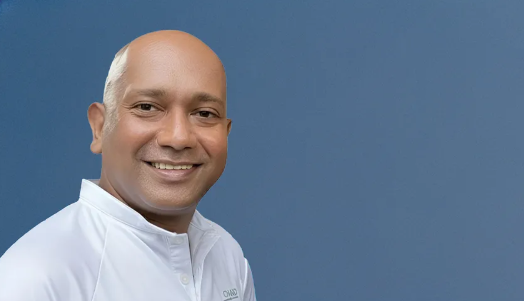
He studied electronics and telecommunications engineering at the University of Moratuwa — Sri Lanka’s most competitive engineering programme — followed by an MBA from the University of Colombo. What followed was a conventional ascent through multinational technology companies: IBM, Cisco, Hewlett Packard Enterprise. Regional roles, multimillion-dollar deals, the trajectory of a person who understood how large organisations buy and sell technology.
Then he left. The severance package from HPE became his seed capital. The corporate strategist became a founder.
The market was not obvious. Apparel manufacturing is not the sector that venture capitalists associate with cutting-edge technology. But it is Sri Lanka’s largest export industry, and the inefficiencies were enormous. Kalutotage had identified a gap that sat at the intersection of what Sri Lanka knew how to build and what the global garment industry needed.
nCinga expanded rapidly — Bangladesh, India, Vietnam, Indonesia. Within five years, the platform was deployed in over fifty factories across multiple countries. The company attracted backing from Dunamis Capital and the Dialog Axiata Digital Innovation Fund, managed by BOV Capital, along with angel investors including the late Dinesh Schaffter.
The significance was not the figure. It was the signal. A Sri Lankan SaaS company, built in Colombo, had been acquired by a regional platform for its technology — not its labour, not its cost advantage, but its intellectual property. The acquisition demonstrated that Sri Lankan startups could build proprietary products valued on their own terms.
What Zilingo intended to do with the technology — deploying nCinga’s manufacturing execution system across its network of six thousand factories — was, in the end, less consequential than what the exit did for the ecosystem. It proved the model worked.
IFINITY partnered with Temenos, engaged with over sixty senior bankers across more than twenty Sri Lankan financial institutions, and expanded into Indonesia and the United Kingdom within three years. The Digital Innovation Fund — the same BOV Capital vehicle that had backed nCinga — invested again and subsequently exited successfully, completing a full venture capital cycle: seed, scale, exit, reinvest.
The fund has backed over a dozen startups to date, deploying over $1.5 million into companies including MintPay — Sri Lanka’s first buy-now-pay-later service — alongside ventures in accounting software, cooperative technology, and Web3 infrastructure. Three portfolio companies have reached breakeven with doubled year-over-year revenue. The fund’s first exit arrived in 2024: Kaiju Labs, a Web3 wallet-as-a-service startup, acquired by Singapore-based KAST Finance at a 2x multiple and a 48.6 per cent internal rate of return.
The numbers are modest by global standards. They are not modest for Sri Lanka, where annual venture capital investment remains in the low single-digit millions. More to the point, they represent something the ecosystem has lacked: a founder who experienced the full cycle — build, exit, learn — and is now recycling that experience and capital back into the next generation of companies.
The ecosystem builders profiled elsewhere in this series created the infrastructure: angel networks, venture funds, startup competitions. Kalutotage is evidence that the infrastructure works. He raised capital from Sri Lanka’s first venture fund. He exited to a regional acquirer. He built a second company with the same team. He is now investing in the cohort that follows.
The capital recycling loop — where successful founders become the next generation’s investors — is the mechanism that separates ecosystems that stall from ecosystems that compound. Sri Lanka has very few examples of this loop operating at full cycle. Kalutotage is one of them.
Source:
https://www.saintclair.markets/p/principals-the-serial-builder