In construction project management, controlling time, cost and progress is very important. Many projects face problems such as delays, cost overruns and poor planning. To avoid these issues, project managers use different tools and techniques. One of the most effective methods is Earned Value Management, commonly known as EVM.
EVM is a system used to measure project performance by combining cost, schedule and actual work progress. It helps project teams understand whether the project is on track or not. In simple terms, EVM tells you how much work you planned, how much you have completed and how much it actually cost.
What Is Earned Value Management
Earned Value Management is a project control technique used to compare planned work with actual work completed and actual cost spent. It helps project managers measure project performance in a clear and structured way.
Instead of only looking at cost or time separately, EVM combines both to give a better picture of project progress. This makes it easier to identify problems early and take corrective actions.
Key Components of EVM
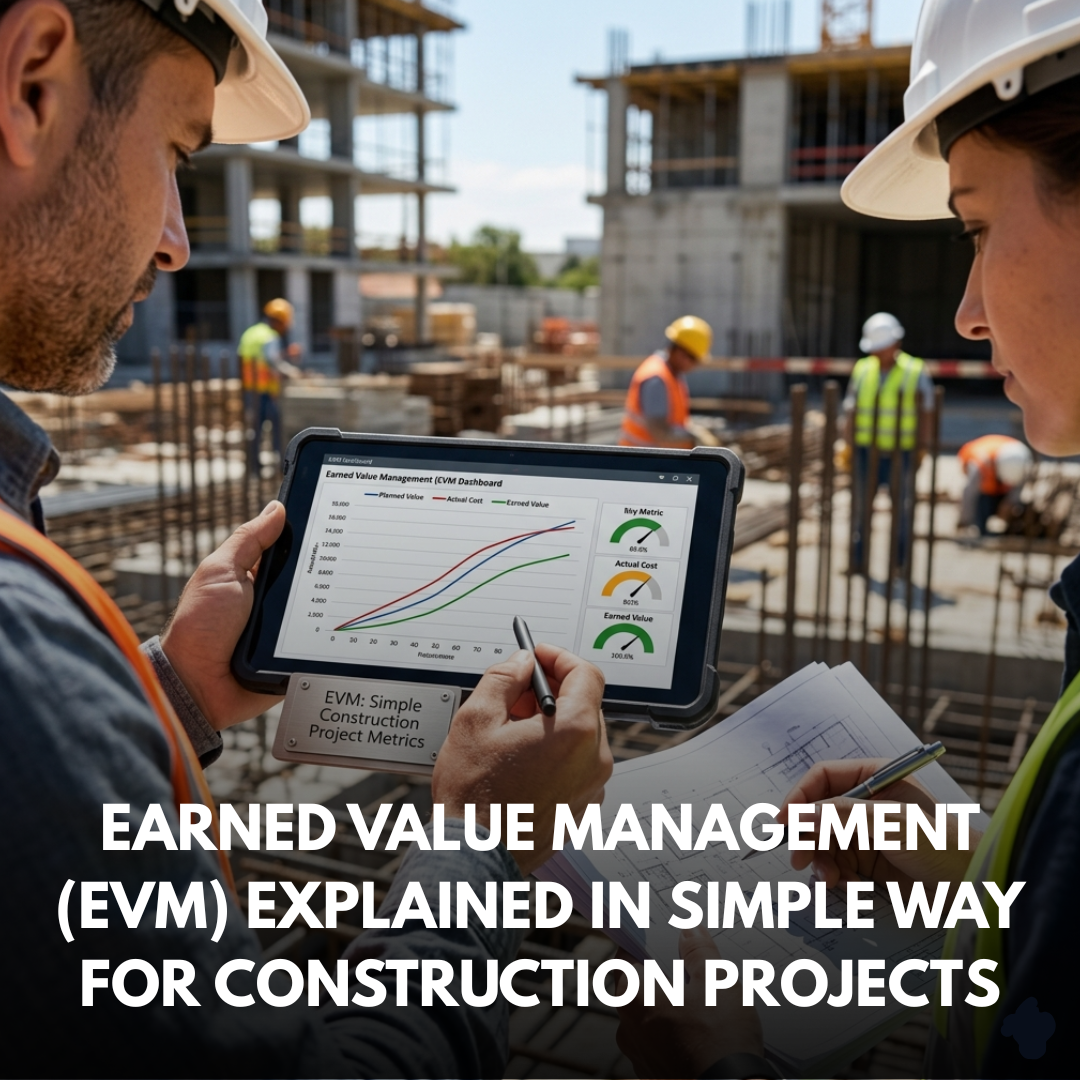
EVM is based on three main values. These are Planned Value, Earned Value and Actual Cost.
Planned Value is the budgeted cost of work that should have been completed by a certain time. It represents the project plan.
Earned Value is the value of work that has actually been completed. It shows real progress.
Actual Cost is the amount of money actually spent to complete the work.
By comparing these three values, project managers can understand project performance clearly.
How EVM Helps in Construction Projects
EVM is very useful in construction projects because it provides early warning signs of problems. If the actual cost is higher than planned, it shows cost overrun. If the earned value is lower than planned value, it shows delay in progress.
This helps project managers take quick action before problems become serious. It also helps in better decision making and project control.
For example, if a building project is planned to complete 50 percent work in three months but only 30 percent is completed, EVM will clearly show that the project is behind schedule.
Importance of EVM in Project Management
EVM is important because it provides a clear and objective way to measure project performance. Instead of guessing progress, project managers can use real data to make decisions.
It also helps in controlling project cost. By comparing planned and actual costs, managers can identify overspending early.
In addition, EVM improves communication between stakeholders. Clients, consultants and contractors can easily understand project status using EVM reports.
Simple EVM Indicators
EVM also uses simple indicators to measure performance. Two important indicators are Cost Performance Index and Schedule Performance Index.
Cost Performance Index shows how efficiently the project is using its budget. If the value is less than one, it means the project is over budget.
Schedule Performance Index shows how well the project is following the schedule. If the value is less than one, it means the project is delayed. These indicators help project managers quickly understand project health.
Challenges of Using EVM
Although EVM is very useful, it can be challenging to implement in small projects. It requires accurate data collection and regular updates. If project data is not updated properly, EVM results may not be accurate.
It also requires some level of training and understanding, especially for teams that are not familiar with project control systems.
For engineers, planners, and project managers, understanding EVM is an important step toward better project control and successful project delivery.