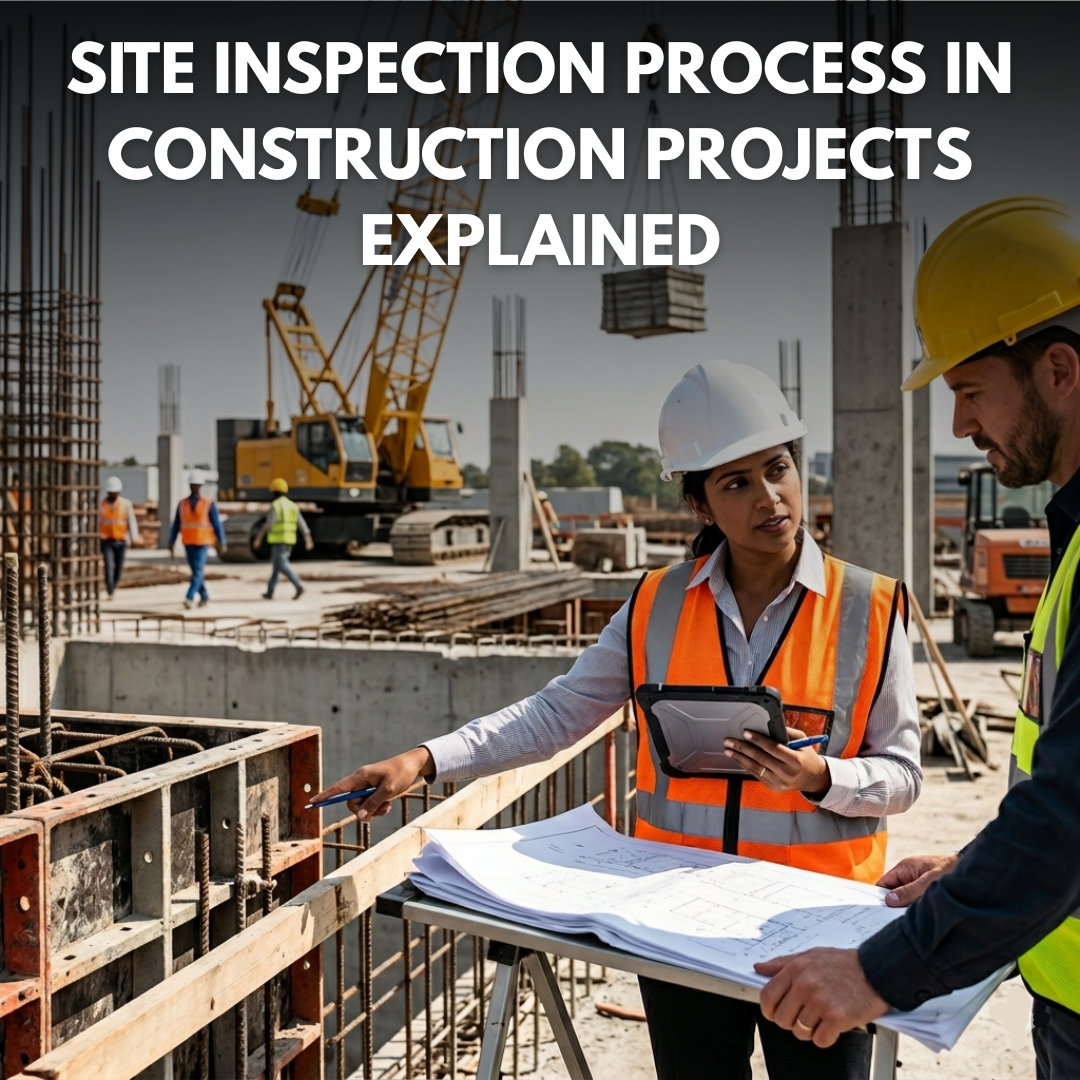
Site inspection is one of the most important activities in construction project management. It helps ensure that construction work is carried out according to approved drawings, specifications, safety standards and project requirements. Regular inspections help identify problems early, improve quality and reduce costly mistakes.
In construction projects, site inspections are carried out throughout different stages of the work. Engineers, consultants, contractors and quality control teams all play a role in the inspection process. Proper inspections help maintain safety, improve workmanship and support successful project completion.
What Is a Site Inspection
A site inspection is the process of checking construction work at the project site to ensure that activities are being performed correctly. It involves examining the quality of work, materials, safety conditions and progress of construction activities.
Site inspections are usually carried out before, during and after specific construction activities. These inspections help confirm that the work meets approved standards and project specifications.
Why Site Inspections Are Important
Site inspections are important because they help maintain the quality of construction work. By checking activities regularly, engineers can identify defects or mistakes before they become major problems.
Inspections also improve safety on site. Construction projects involve many risks and regular inspections help ensure that safety procedures are being followed properly.
In addition, site inspections help monitor project progress and ensure that work is completed according to the schedule. This helps project managers maintain better control over time, cost and quality.
Types of Site Inspections
There are different types of site inspections carried out during construction projects. One common type is the quality inspection, which checks whether the work meets required standards and specifications.
Safety inspections are also very important. These inspections focus on identifying unsafe conditions, checking protective equipment and ensuring that workers follow safety procedures.
Progress inspections are carried out to monitor the status of project activities and compare actual progress with the planned schedule.
In some projects, final inspections are conducted before handover to identify defects or unfinished work.
Site Inspection Process
The site inspection process usually starts with planning the inspection. The engineer or inspector reviews drawings, specifications and previous inspection reports before visiting the site.
During the inspection, the work area is carefully checked to verify that activities are carried out correctly. Measurements, materials, workmanship and safety conditions are examined.
If any issues or defects are identified, they are recorded in an inspection report. The contractor is then informed and corrective actions are requested.
After corrections are completed, follow up inspections may be carried out to ensure that the issues have been properly resolved.
Role of Engineers and Project Managers
Engineers and project managers play an important role in the inspection process. They ensure that inspections are carried out regularly and that work complies with project requirements.
Site engineers monitor daily activities and coordinate with contractors to correct any identified issues. Project managers review inspection results and make decisions to maintain project quality and progress.
Good communication between engineers, contractors and consultants is essential for effective site inspections.
Common Problems Identified During Inspections
Site inspections often identify issues such as poor workmanship, incorrect measurements, defective materials and safety violations. In some cases, work may not follow approved drawings or specifications.
If these issues are not corrected early, they can lead to delays, rework, additional costs, and quality problems. Regular inspections help prevent such situations and improve project performance.
Benefits of Proper Site Inspections
Proper site inspections provide many benefits to construction projects. They improve quality by ensuring that work is completed according to standards and specifications.
They also improve safety by identifying hazards and ensuring compliance with safety procedures. In addition, inspections help reduce rework, save costs, and improve overall project efficiency.
For clients and consultants, regular inspections provide confidence that the project is progressing correctly and that the final outcome will meet expectations.