Artificial Intelligence is entering almost every professional field, and project management is no exception. Many discussions around AI begin with a dramatic question: Will AI replace project managers? I think that is the wrong question. A more useful question is: which parts of project management can AI improve, and which still require strong human judgment?
Project management has always been about dealing with uncertainty. Projects bring together people, time, money, technology, expectations, and constraints. Requirements are not always clear. Stakeholders may not always agree. Risks may not be visible at the start. Plans change. Deadlines move. Resources become unavailable. A good project manager brings structure to this uncertainty and helps the team keep moving toward the intended outcome.
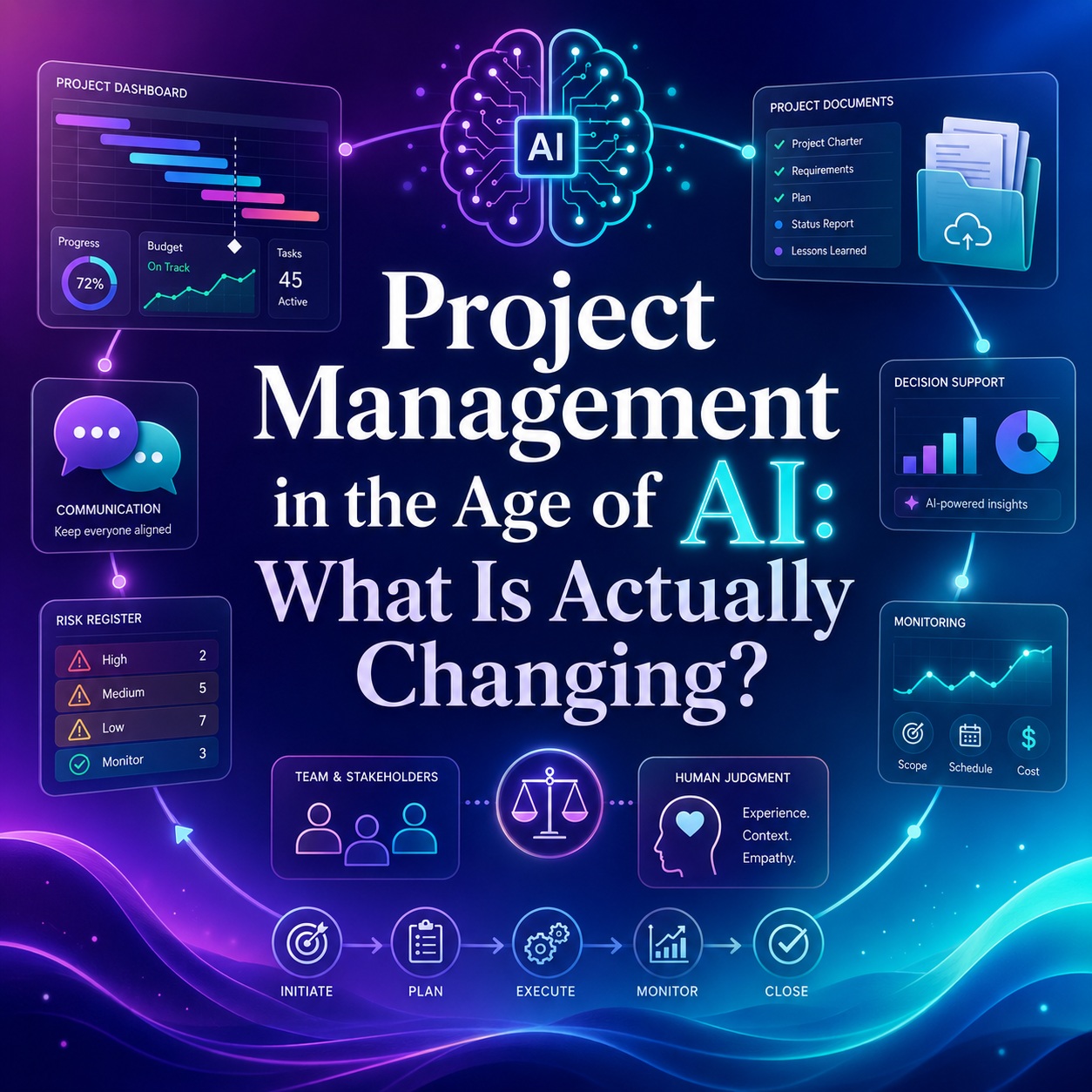
This is where AI, and especially Generative AI, can be useful. It can help project managers handle some of the information-heavy and repetitive parts of their work. For example, AI can help draft project charters, summarise meeting notes, prepare status reports, organise risks, identify missing assumptions, compare alternatives, and improve stakeholder communication. These are not small tasks. In many projects, project managers spend a significant amount of time documenting, reporting, following up, and making sense of scattered information.
However, AI does not automatically improve project management. If the project scope is poorly defined, AI may produce a polished document around a weak idea. If the schedule is unrealistic, AI may help present it more clearly, but it will not make the timeline achievable. If stakeholders are not aligned, AI may draft better emails, but it cannot build trust on the project manager’s behalf. If risks are ignored, AI may help create a risk register, but someone still has to act on it.
So, what is actually changing?
First, the documentation burden can be reduced. Project managers often need to convert discussions, decisions, and updates into usable documents. AI can support this work by producing first drafts, summaries, checklists, and structured templates. This does not remove the need for review, but it can reduce the time spent starting from a blank page.
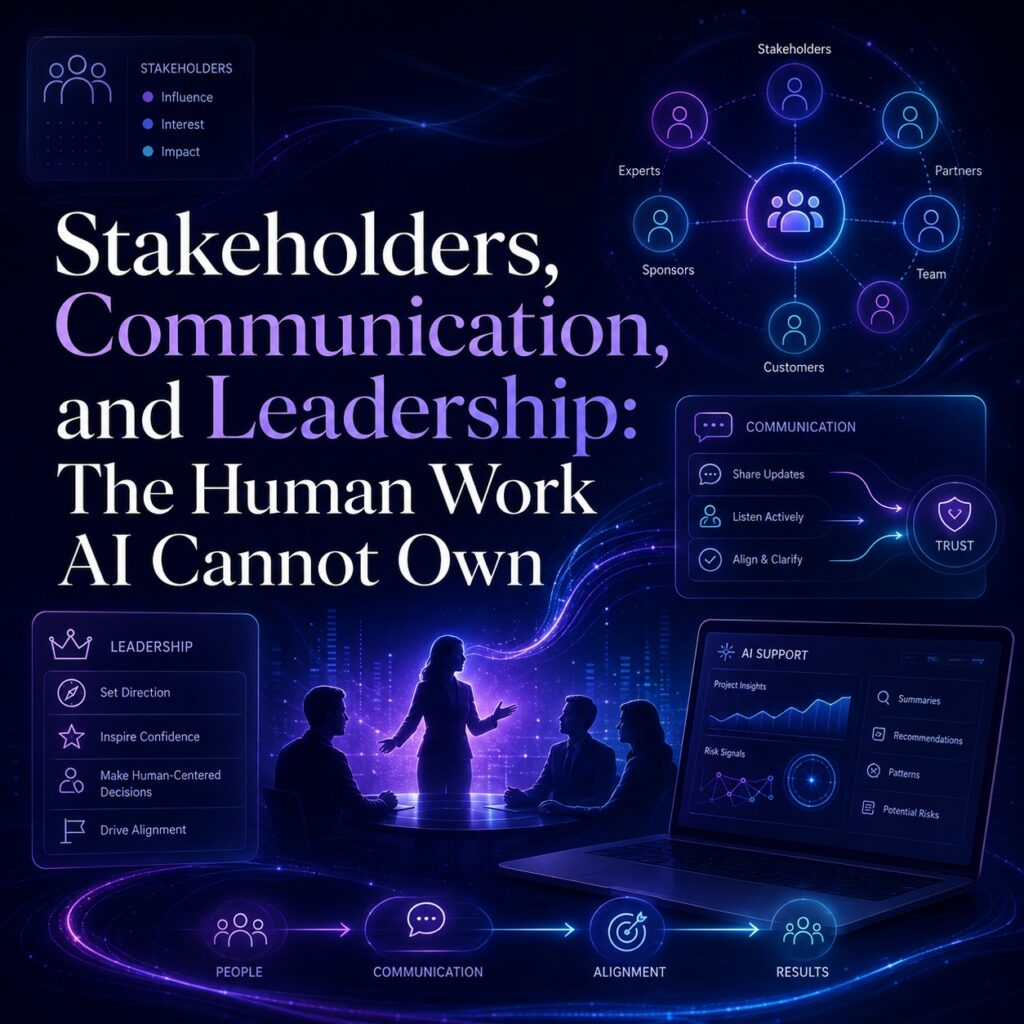
Second, project communication can become faster and more tailored. A project manager may need to explain the same issue differently to a technical team, senior management, a client, and an external partner. AI can help adjust the tone, level of detail, and structure of communication for each audience. But the project manager must still decide what to say, what not to say, and what the message really means for the project.
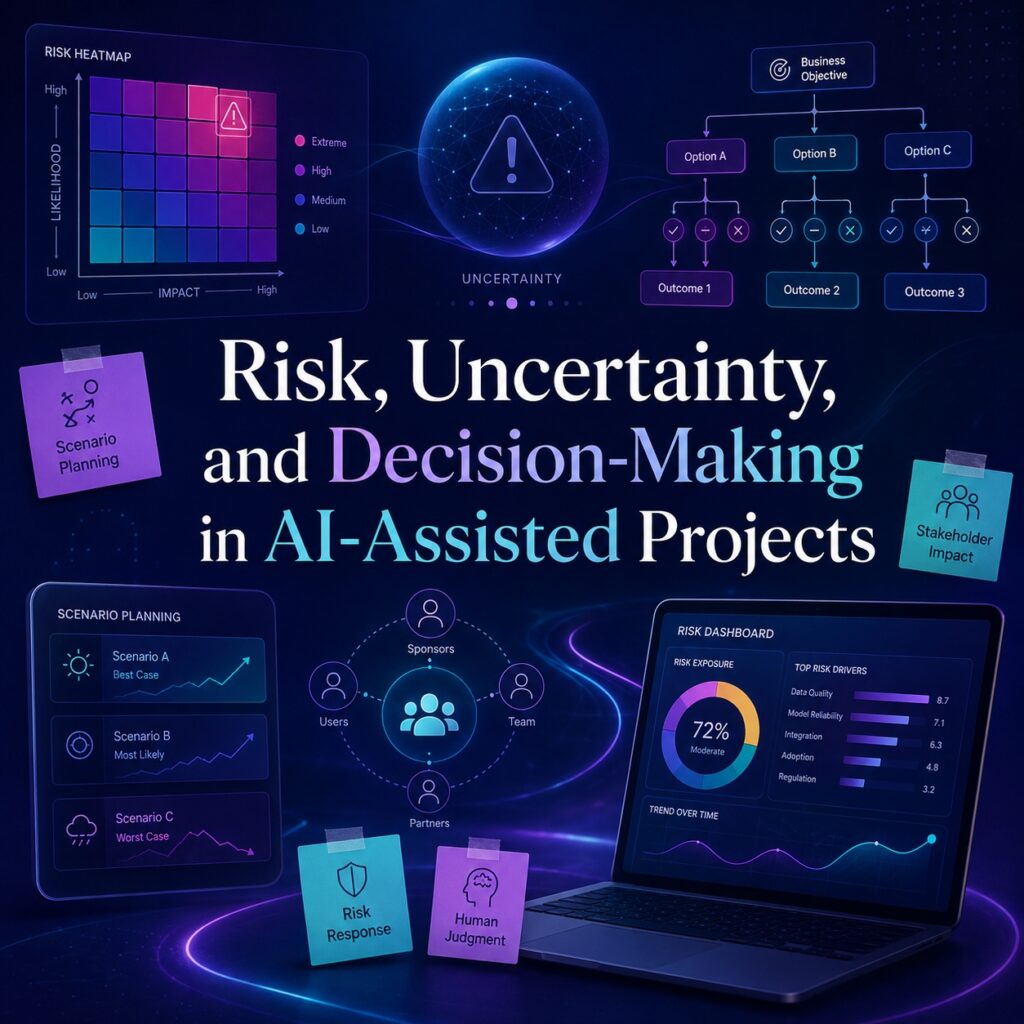
Third, decision support can improve. AI can help list options, identify trade-offs, highlight assumptions, and generate scenarios. This can be valuable when dealing with risk, delays, budget pressure, or competing priorities. Still, AI should not be treated as the decision-maker. It can support judgment, but it cannot carry accountability.
Fourth, project monitoring can become more intelligent. If project information is properly captured, AI tools can help detect patterns, summarise progress, flag inconsistencies, and identify possible early warning signs. This can help project managers move from reactive reporting to more proactive control. But this depends heavily on the quality of the information provided. Poor data will still lead to poor conclusions.
The biggest change, therefore, is not that AI replaces project management. It changes the way project managers work. It shifts some effort away from routine drafting and organising, and creates more space for thinking, checking, guiding, and leading. In that sense, AI may make weak project management more visible. It may expose unclear scope, weak governance, poor communication, and a lack of accountability.
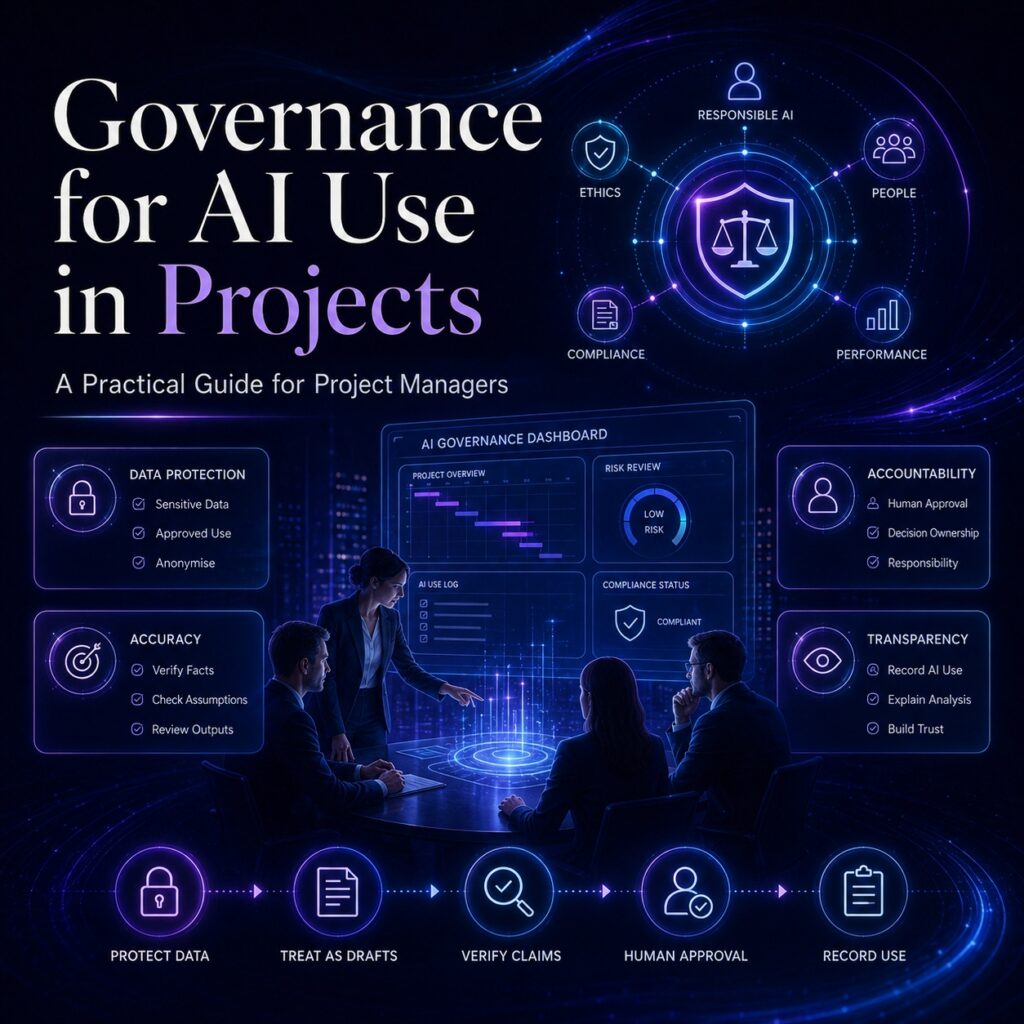
For modern project leaders, the challenge is to use AI without becoming dependent on it. They must learn to ask better questions, validate AI-generated outputs, protect confidential information, and keep human responsibility at the centre. The project manager’s role may shift from producing every document manually to ensuring that the right decisions are made, the right people are engaged, and the project remains aligned with its real purpose.
AI will certainly change project management. But it will not remove the need for project managers who can think clearly, communicate well, manage uncertainty, and lead people. If anything, those qualities will become even more important.